


In this episode of CFO Weekly, Chris Garber, Chief Financial Officer at Guild, joins Megan Weis to explore the evolving dynamic of the CFO generalist vs specialist, discussing how AI is reshaping the role from technical expert to cross-functional business leader. Chris brings a unique perspective shaped by fifteen years working with a transformational mentor across multiple companies, leading diverse functions from FP&A and analytics to sales operations, IT, and workplace experience.
With deep experience across SaaS, public companies, IPOs, and large-scale business transformation at Guild, LiveRamp, and Acxiom, Chris shares how AI and automation are accelerating the shift away from traditional finance specializations toward more versatile, business-minded leaders. Currently serving as CFO at Guild, a company transforming workforces for Fortune 1,000 companies, Chris discusses why the future belongs to finance leaders who can move from being scorekeepers to coaches, from producing numbers to telling strategic stories, and from managing teams to driving cross-functional impact.
Show/Hide Transcript
Megan - 0:26: Welcome back to CFO Weekly. Today, I'm joined by Chris Garber, Chief Financial Officer at Guild and a modern finance leader with deep experience across SaaS, public companies, IPOs, and large scale business transformation. Chris has built a career at the intersection of finance, operations, technology, and strategy, leading teams that span FP and A, analytics, sales operations, IT, and workplace experience. From his time at Guild, LiveRamp, and Acxiom, he's had a front row seat to how the finance function is evolving as AI and automation reshape how work actually gets done. Today, we'll explore why traditional finance specializations are starting to break down, how AI is accelerating the shift toward more versatile business minded leaders, and what it really means to be an AI savvy finance generalist in today's environment. Chris, welcome to CFO Weekly.
Chris - 1:49: Hi, Megan. Thanks for having me. Great to be here.
Megan - 1:52: Before we dive into AI operating models and the future of the CFO role, let's start somewhere a little more personal. You've been a drummer in your family band for over a decade. Do you find that counting beats and keeping rhythm shows up in how you run finance, or did being a CFO somehow prepare you for life behind the drum kit?
Chris - 2:12: I love the question and I love starting with something a little personal. And today, playing in the family band is really about getting to do music with my kids. I've got a 13 year old daughter and 11 year old son. And so most of the music that I'm playing these days is home studio really kind of turning them on to music that I like or getting to be with them while they're learning to be musicians themselves. I do think, though, thinking about the business world, there's a creativity in music or being a musician that I see show up a lot in problem solving or in working with different types of people or different groups of people. And I know we're going to talk about AI and other things. I think one of the most interesting places this translates is sort of the idea of mastery. I think a lot of business leaders like myself, we spend a lot of time studying some of the greats. We have leaders that we respect or we admire. And then this is super true about musicians. Like, even if you think you've mastered something in one area, you always come across somebody who just makes you instantly feel like a novice again or makes you want to learn something new. When I kind of approach the CFO role or we're working on some sort of business strategy problem, again, that creativity and that continuous learning that goes along with on the forefront of your business, to me, is just a really cool crossover and something I love to keep doing.
Megan - 3:41: That's so fun with your kids. What instruments do they play?
Chris - 3:44: My daughter is playing a lot of classical piano. She's a pianist, but then is now in her middle school rock club, so we're getting into Jimmy world and Queens of the Stone Age. Then my son is a drummer. That's the one instrument that I can play as well, and we make a lot of noise in my house. I always tell my wife, it seems like the brainwashing since they were really early, we were there probably playing with music from age two on, the brainwashing's been working.
Megan - 4:13: And that sense of rhythm and coordination actually feels like a great metaphor for modern finance, balancing structure with creativity, timing, with judgment, so let's rewind a bit. If you could maybe take us back to the beginning of your career, and as you look through your career, when did you first realize that finance could be more than reporting numbers and that it could actually put you at the center of how a business operates and grows?
Chris - 4:40: For me, I've had the privilege of getting to be in a variety of both finance and operational roles at a bunch of different kinds of businesses. I started my career at Applied Materials in the Silicon Side of Silicon Valley. I spent time in software businesses. I helped take a clean tech company public. I was part of a very large business transformation at a marketing services business. As CFO, Guild is really on the forefront of working with Fortune 1,000 companies who are trying to transform their workforces to attack some of their most important business challenges. I think the music parallel here I talk about a lot is, like, every business is sort of like an orchestra that needs a conductor and there are a lot of teams in the company that can play a role in that organization, but I think the most strategic finance functions are ones that really are able to coach every business along towards what its objectives are and really help a company and help a leadership team optimize how that execution is playing out. And so I was part of a number of finance teams in some of those early experiences where fortunately, because of the nature of the business and the nature of the CFO who was one of my mentors, we had a front row seat to that, and finance was kind of expected to be the tip of the spear in terms of working with every part of the business to make sure we were scaling the way we needed to or that sort of optimizing for what the business needed or what the strategy said was going to happen. And I think then over time, that just became, again, from the CFO's seat or from the finance leader's seat, the ability to be highly cross functional in putting those puzzle pieces together has become a really big asset. And I just got to see that all the way back in the beginning. I remember at Applied Materials, one of my first roles was only one of a few finance people in a multi $100,000,000 division, and we didn't get to speak finance all the time. We were working with engineers. It was about working with supply chain, working with operations people, and it was all about the business objective. And so I felt really fortunate early in my career to have a couple experiences like that where your function as finance sort of had to fade into the background and you had to be really clear on what the division needed and what the company needed and build a literacy in speaking with every other function really beyond finance.
Megan - 7:26: And it seems like back then, finance roles were often highly specialized. You had FP and A here, accounting there, and ops was somewhere else. So when did you first start to feel that model breaking down for you personally?
Chris - 7:39: One of the places that it stands out to me a lot was actually when I was in a finance leadership role at a company called Acxiom, which was a decades old marketing services company. And one of the things that really stuck out there, our CEO, actually, he and I had this conversation as I was leading FP and A, and we were talking about, hey, what did the business need from our team? And one of the things he said to me was like, look, I need FP and A to be a coach and not a scorekeeper. In a sense, I think what he meant is like, okay, look, we all understand the data. In some ways, anybody can keep score as long as you've got that figured out and that's table stakes in a transformation is you need to know what reality is and you need to know where you're going, but the power and I think the influence in where you can take that to the next level is not just being able to build the model, but then creating the path and sort of leading the way on that transformation. And I think with what's happening, if you look at what's happening with AI today, I think there are a lot of parallels. There are so many opportunities around adoption and potential, but I think the real difference is going to get made by the leaders and the teams that can use those tools to transform their work, transform the way their companies operate, and ultimately create inflections in the real world, not just on paper. And I think, again, finance leaders play a really essential role in putting the impact front and center because at the end of the day, all of us, we're not judged by the quality of our plans, we're judged on the quality of our execution.
Megan - 9:20: And in the last few years, as you take a look at those, as AI and automation has started taking over more of the technical work that we've historically seen within finance, what has changed most dramatically about how you spend your time as a finance leader?
Chris - 9:35: I think about two things. The first is I'm spending a lot more of my time orienting our teams towards experimentation. The reality is some of what we're trying to accomplish now, in some ways, many things being called AI today, probably five years ago, we would have just called automation. And so in some ways, the objectives haven't changed, but the way to get there, the power of those tools in the age of AI is incredibly different, and so there's a lot more possibility there. And it's still pretty early in a lot of the tools that are available, the platforms that are available to finance teams. So of course, there's things like Claude and others that in the chat oriented LLMs, but many of us are managing big enterprise systems and business processes that still like AI coming to those things. It's happening very rapidly, but it's still early innings. And so we would probably normally have said, hey, we're going to wait for a bunch of tools to get to be enterprise grade for the scale and stage of company that we have. We've kind of thrown that out the door over the past twelve or eighteen months and saying, look, we need to be much more comfortable piloting early technologies, working even with some of the founders and the companies that are at the forefront of bringing some of this technology to the office of the CFO or other functions because just sitting around and waiting for these things is not going to be the right answer. We need to learn alongside with those companies, not just about what the technology can do, but also about how our work needs to change. So again, I think the first is really pushing a lot more experimentation inside of our organization. And then secondly, probably something that two years ago I wasn't doing much of and then today I spend a lot more time on is taking some personal responsibility to build things with AI myself. My style as a leader is to want to lead from the front on some of those things and to have really first hand knowledge about some of what I'm asking my teams to do. I look at it as if I can show my teams how I'm making AI relevant for my role as CFO, then everyone else can see and think about that for themselves as well.
Megan - 12:00: And any tips on like how you can teach yourself how to use AI and just any tips for CFOs out there who really don't know where to start?
Chris - 12:10: Yeah. I think getting started is the hardest part. And at least from my experience, as I've gotten into it, it's easier than I expected. I think there are two elements. The AI tools have gotten so good that you can ask AI to teach you how to apply it to your role and so having trouble getting started, I would just start a chat with AI as your collaborator and ask it for ways that you might do that. In reality, building a familiarity with how to actually be conversational about what you're trying to accomplish, what you're going to realize is that barrier is actually much lower than you think, and you can probably find some ways in probably a half an hour to get value out of it right away. I think the second element at the end of the day is for each of us, some of our functions are going to use AI oriented platforms really in their day to day job, but at a leadership level too, a lot of what you're trying to do is how do I use AI as a collaborator for me to get better output? Maybe it's writing a message to the company or preparing for a board meeting or figuring out how to automate some personal workflow for tracking to dos. In reality, you know your workflow and the message or the way that you want to communicate the best, and so it's really hard to wait for somebody else to do it for you. So building that familiarity then lets you use all the expertise that you have right up front, and nobody knows your message or your workflow like you do.
Megan - 13:50: And you've led across FP and A, analytics, sales ops, IT, and workplace experience. So first of all, was it just luck that you got to see that many components of a business, or were you intentional about that? And how has it reshaped how you show up as a CFO?
Chris - 14:07: It definitely wasn't luck. I would say two things. I am definitely the product of somebody who, for a large portion of my early and middle career, was the product of someone who had a really great mentor. So I worked across four different companies for the same CFO for the better part of about fifteen years, and so was fortunate to find someone who was really strategic, incredibly transformational in terms of the business impact that we got to have as a team and was someone who always saw the best in me and always saw, was just trying to create opportunity. I always said, like, at every chance threw me into the deep end of the pool, especially the second I got comfortable with one thing, it was just, okay, on to the next. So along that journey, I had the opportunity to lead lots of different types of teams, I think both in terms of helping me become more well rounded as a leader, but also was almost always driven by something the company needed. Hey, we need someone who can step in and hire a great leader for this team or we need something new out of this team, we need to transform our sales ops function and it obviously needs to work really closely with finance or FP and A. And so I tried to always step into roles where it was both development and growth for me as an individual and as a leader who was learning, but also it was inherently linked to something that the company needed and that the business needed. I think the net result of that is you think about the way a company functions, companies are not just made up of individual functions. So much that happens as a company is scaling and growing is about the way internal teams work cross functionally. And so I like to think about many of the functions I've been privileged to lead are sort of the central nervous system of the organization. Sometimes they're in finance, sometimes it's analytics, maybe out in the product world or sales ops in the commercial side of the business, but at the end of the day, that cross functional orientation, the way information moves around a company, the more awareness you have about how those pieces fit together and how they power the various elements of your company or the business strategy ultimately for me has just been a way to scale up the way I think about how to have the broadest impact possible in the things that we're trying to get done as a business.
Megan - 16:49: And personal growth often requires letting go of old habits. So as you think about your own personal AI journey, has there been a skill, habit, or mindset that you've actually had to unlearn to become a more effective AI savvy generalist?
Chris - 17:04: There's a couple things that come to mind. On the AI front, I think the first thing is just the willingness to unlearn some things. So many of us as finance leaders, we are time starved. We're always context switching between different things, and so I think there is almost part of our training what makes us successful and that we've learned by experience is there's a lot of optimization about, hey, if I do this thing in this way, I can complete it really quickly or this is the way I always tackle a problem or what have you. And the reality with AI is there is this need to sort of start over. And I always keep thinking about it as like there are some moments where going fast requires moving fast, and there are other moments where you kind of have to go slow to go fast. And I think AI is one of those areas. You've got to start from a more basic spot. If you default to, I'll do AI on Saturday, and today, I'm just going to do this thing the same old way I've always done it, you're going to really slow down progress. And so I think it is recognizing that not everything is going to be optimized upfront and trying the new path first becoming really important to the way that you tackle a problem. Thinking back to also to your other question about just leading many functions in a company or partnering with different functions, you kind of have to take that same approach as well. As I grew up on the finance side, as an example, like leading business systems organization or an analytics organization, they're not the same as leading a finance organization. And so you have to, I think, in those demonstrate some agility of being able to meet the situation you're in with adaptability and meeting those teams where they are and also in the role that they're expected to play in the company, even if at the end of the day, I'm sort of a finance leader at heart. And I think that like we were talking about that also then sort of translates into the AI skills world is there is an agility and just a table stakes sort of skill that I think all of us need to continue to lean more into.
Megan - 19:20: And when I look back maybe five or ten years ago, there was a lot of fear around AI replacing accounting or no longer there would be need for accountants. So from your seat at Guild, how do you see AI elevating finance and accounting leaders? Not by replacing them, but by forcing stronger judgment, context, and cross functional thinking?
Chris - 19:42: I think it's a super exciting time to be in this because the reality is we've always said in our functions that we used to have this saying which was like, standardize the clerical, automate the manual. We've always been a function where we've had a desire to say we're going to simplify and automate parts of our work, the transactional parts of the work, so that we can focus on being more strategic or driving more business impact. And in reality, that's happened to some degree and not to the degree that everybody wants to. I think every finance team is still saying, like, I'd love to get rid of this busy work so that I can be more strategic in my company. And so I think actually when you look at now what's happening with AI on top of some of the other technologies we already use, the idea that most of our transactional work could actually start being automated away or being done by agents. I think for the first time, like you can start to see where that is really a probable situation. And so in reality, no one got into finance to say, you know what, I want to spend every day for the rest of my career creating the journal entry for the next monthly close. In reality, every leader wants to, hey, how do I take what I know about finance, about my technical expertise, and apply it to the business. So I think one of the most important things that I get to do every day as CFO is to put our results and our forecasts and our strategy in context of our stakeholders. So a key part of being impactful from the finance is really being able to tell the story what happened in the past, what are we seeing in the future, what does it mean for the decisions that we're making as a company, what does it mean for the decisions that we need to influence in the business? At the end of the day, these advances in our core work, I think, means that everyone in finance has an opportunity to step up in terms of driving real decisions, given that so much of some of that day to day work or the transactional parts of what's happening are now able to be to be automated or being able to be done by agents.
Megan - 22:14: And as this transformation accelerates, how does it change the way that you think about building finance teams? Who you hire and what you train them to do?
Chris - 22:22: I think, look, there's some things that at their core probably haven't won't look that different in the future than maybe the way that they looked in the past, but I do think they'll have they'll be greater impact. I've always thought that, hey, when I hire folks on the finance side, I want people who have a lot of technical depth and I want people who really have a lot of adaptability, have a lot of curiosity because the core part of what we do comes down to our functional knowledge, our technical skills, but the real benefit has always been our ability to apply that to business scenarios, apply that to leadership scenarios, influence the decisions that are getting made in our companies. I think those skills are going to be increasingly more important. I don't think the bar is going to change in terms of what good looks like and the reality is those are going to be at the forefront more and more. I think a second thing when we're thinking about building teams in the more recent history, I think most everybody out there is really focused on, hey, how do I do more with less? I know I've got to build. We're not in the growth at all cost days anymore, and so we are expected to be really responsible stewards of talent and builders of organizations. We're building lean teams kind of from the beginning. I think with AI, we're building teams that are going to have a lot fewer coordination layers. I'm looking for leaders who are willing to get closer to the work and be player coaches, folks who really understand what the work on the ground looks like and as a result are able to direct the humans on their teams against that work, but also understand where to apply technology to the work that their teams are doing. So folks who really have a willingness to roll up their sleeves, and who have a hands on knowledge of what good looks like so that we direct those resources in the best way possible.
Megan - 24:36: And for finance leaders who built their careers as specialists, what mindset shift do they need to make to thrive in this new era of AI enabled generalists?
Chris - 24:46: The thing I think about is really redefining your measure of success. And so I think a lot about scope of impact versus scope of responsibility. I think there's a legacy way of thinking about your career. As I move up in my career, I'm just going to keep managing more and more people or larger and larger teams. And in reality, that's never been the thing that matters, although it was sometimes part of the equation in the past. I think influence has always come from scope of impact. And so leaders today, I think, really understanding where they are driving impact for their teams, for their leadership, and for their companies as the primary driver of success and doing that broadly. So the specialization is important, it's also not the end. It's a means to the end of having a broad cross functional impact. And so I think it's a real opportunity today as AI is able to handle some of the grunt work on the ground. The opportunity is for leaders to be able to sit across that and again focus on scope of impact rather than size of team.
Megan - 26:08: And lastly, when you think about the next generation of CFOs, what skills or experiences do you believe will matter far more than traditional finance credentials and what about that future excites you most?
Chris - 26:20: I think we've been talking about some of these themes in this whole conversation. The core on the ground experience in terms of finance credentials is important in the sense that it's a raw ingredient, but it's not the thing that's going to define you as a strategic CFO in this new world. I think those skills and experiences are twofold. One is really being able to be a cross functional generalist. In some ways, I think the best CFOs know more about their business, whether it's sales, operations, where customer value comes from. You need to be at the forefront of that as CFO, I think, to play the role that we want to play. And the second is a little bit of being an operator is how do you then bring that impact into reality? So it's going to be the CFOs that are also great marshallers of resources or directors of activity. CFOs who can connect strategy to execution are ultimately the ones that in terms of like where I spend my time and where I try to put the most focus is having impact at that level.
Megan - 27:35: Chris, this has been a powerful conversation, not just about AI, but about how finance leadership itself is being redefined and your perspective on moving from technical mastery to business fluency really captures where the CFO role is headed. So thank you so much for joining us today on CFO Weekly.
Chris - 27:53: Thanks for having me, Megan.
Megan - 27:55: Thank you for sharing how finance leaders can stay relevant, impactful, next week. And until then, take care.
What You'll Learn:
-
Why traditional finance specializations are breaking down in the AI era
-
How AI is enabling finance leaders to shift from scorekeeping to coaching
-
The importance of experimentation and hands-on AI learning for CFOs
-
Why cross-functional experience matters more than ever for finance leadership
-
How to build finance teams focused on scope of impact over scope of responsibility
-
The skills future CFOs need beyond traditional finance credentials
Key Takeaways:
From Scorekeeper to Coach: The CFO Generalist vs Specialist Shift
The most impactful finance functions don’t just track results—they act as the conductor of the organizational orchestra, coaching every business function toward optimized execution. Early in his career at Applied Materials, Chris learned that working in a multi-hundred-million-dollar division meant stepping beyond finance language to develop literacy in engineering, supply chain, and operations, always keeping the business objective front and center.
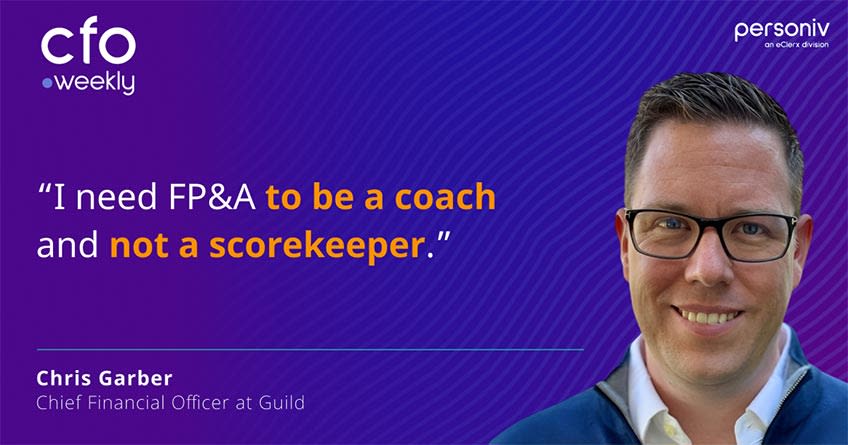
“I need FP&A to be a coach and not a scorekeeper.” Garber pointed out. - 00:03:41 - 00:09:20
Leading from the Front with AI
Effective AI adoption starts with personal responsibility. Rather than delegating AI experimentation entirely to teams, Chris spends significant time building things with AI himself, demonstrating how he makes it relevant for the CFO role. This leadership-by-example approach helps teams see practical applications and builds organizational confidence. Getting started is simpler than most leaders think—AI can even teach you how to use it for your specific role.
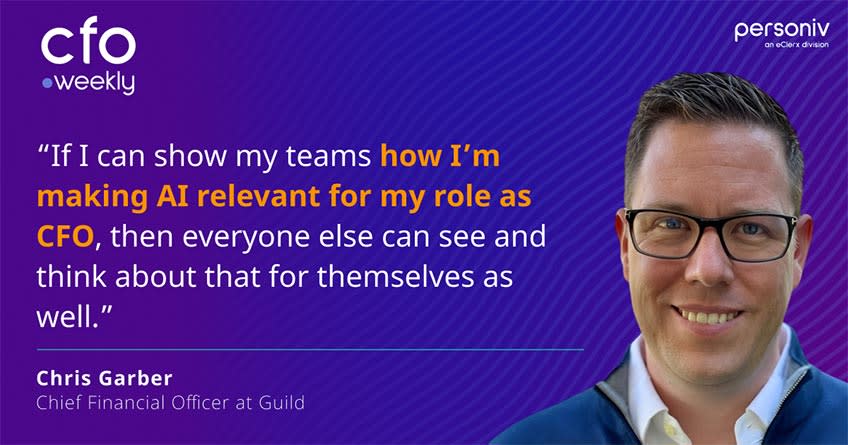
“If I can show my teams how I’m making AI relevant for my role as CFO, then everyone else can see and think about that for themselves as well.” Garber shared. - 00:12:10 - 00:13:50
Automating the Transactional to Enable the Strategic
For the first time, the long-standing goal of automating transactional finance work to focus on strategic impact is becoming genuinely achievable. As agents and AI tools handle more routine tasks like monthly close journal entries, finance professionals can finally apply their technical expertise to business decisions. The most important work for CFOs is putting results, forecasts, and strategy in context for stakeholders—telling the story of what happened, what’s coming, and what it means for company decisions.
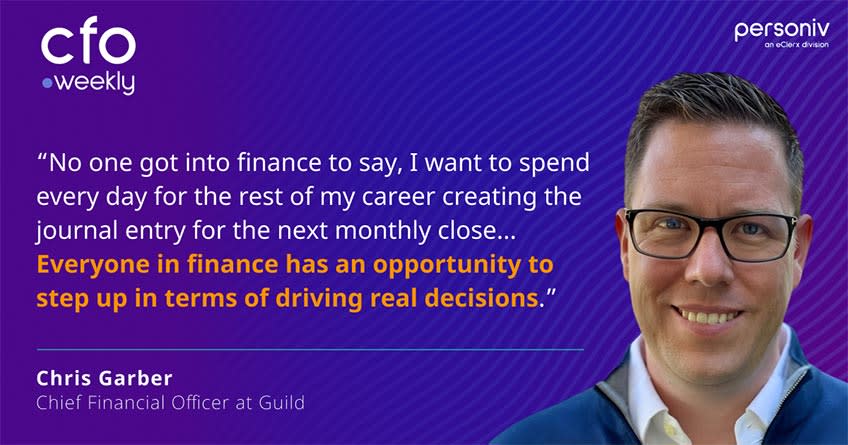
“No one got into finance to say, I want to spend every day for the rest of my career creating the journal entry for the next monthly close… Everyone in finance has an opportunity to step up in terms of driving real decisions.” Garber commented. - 00:19:42 - 00:22:14
Scope of Impact Over Scope of Responsibility: Generalist vs Specialist CFO
The traditional career ladder of managing progressively larger teams is becoming obsolete. Future CFOs will be defined by scope of impact rather than scope of responsibility. Specialization remains important, but only as a means to the end of having broad cross-functional influence. As AI handles more grunt work, leaders can focus on driving impact across the organization. The best CFOs are cross-functional generalists who deeply understand sales, operations, and customer value while also being strong operators who connect strategy to execution.
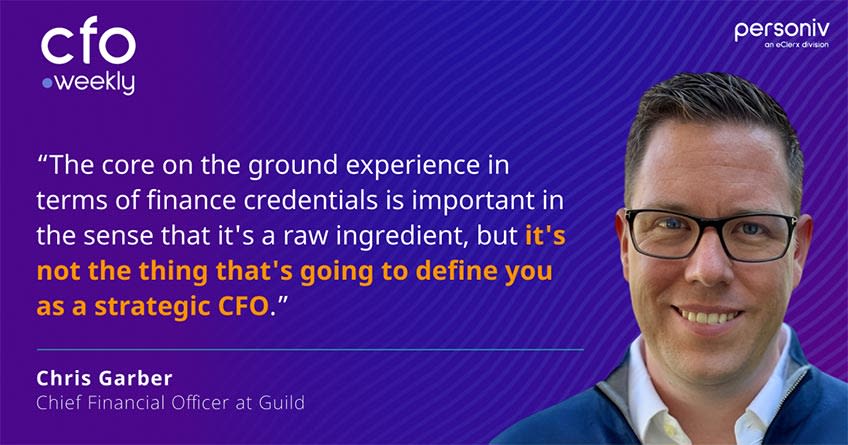
“The core on the ground experience in terms of finance credentials is important in the sense that it's a raw ingredient, but it's not the thing that's going to define you as a strategic CFO.” Garber said. - 00:24:46 - 00:27:35
Want more insights? Explore our full library of podcast blogs here.
To listen to the full conversations, check us out on Apple Podcasts, Spotify, and our RSS or your favorite podcast player!
Instructions on how to follow, rate, and review CFO-Weekly are here.
Ready to broaden your impact? We deliver premier finance and accounting solutions tailored to help you drive strategic growth. Drop us a line today to learn more.


