

Finance transformation isn’t just about implementing new systems or buying the latest tools—it’s about how work actually gets done. That was the clear message during our recent Tech + Talent: What’s Powering the Most Effective Finance Organizations webinar on Wednesday, February 4th. Co-hosted with the CFO Leadership Council, the discussion brought together finance leaders from diverse industries to share practical, experience-led insights into what is truly powering today’s most effective finance organizations.
The consensus? Meaningful transformation doesn't happen in a silo. It comes from intentionally aligning technology, talent, and operating model design.
Rather than positioning automation as a replacement for people, the conversation focused on a "Tech + Talent" approach: using technology to help finance teams scale, improve accuracy, and create space for higher-value work.
Key Takeaways
-
Automation empowers, it doesn't replace. Successful transformation focuses on upskilling staff to utilize tools, rather than replacing them.
-
Start small to scale fast. Leaders suggest targeting micro-processes and transactional areas like AP/AR for immediate, high-impact automation wins.
-
Talent remains the differentiator. While technology accelerates work, human judgment and context are critical for strategic decision-making.
-
Hybrid models are the future. Scaling effectively requires a mix of internal teams, outsourcing partnerships, and "off-the-shelf" solutions.
Tech + Talent: The Core Truth
One of the most persistent misconceptions about finance transformation surfaced early in the conversation: the fear of replacement.
Melissa Clark, SVP and CFO at Primera Engineers, addressed this head-on, noting that the goal of automation is empowerment, not elimination.
“One of the assumptions that is always out there is, ‘Oh, it’s going to replace my people.’ And that is not true… it’s not going to replace you,” Clark explained. “We just have to upskill you in these areas to understand how to utilize these tools.”
This perspective reframes automation from a threat into a massive opportunity. By shifting the focus to upskilling, technology changes how the work gets done, while people remain central to the judgment, accountability, and interpretation that drives business value.
Tech + Talent: Technology Accelerates — People Transform
Across the panel, there was strong alignment that AI and automation are accelerators, not silver bullets. Cisco Sacasa, CFO at Sensible, emphasized the importance of pacing and focus when introducing new tech.
“When we first jumped into AI transformations, we wanted to change the whole landscape… and what we learned is that it was just too much, too fast,” Sacasa shared. “The technology wasn’t ready. The organization wasn’t ready. The people were not ready.”
Instead of attempting sweeping, overnight change, Sacasa described a more pragmatic approach: starting with "micro processes" and building momentum over time.
“We started looking at how we could get significant value by improving micro processes, as opposed to trying to change everything at the same time.”
Where Technology Is Delivering Real Impact
So, where should finance leaders start? The panelists consistently pointed to highly transactional areas as the most natural launchpad for automation.
Accounts payable, accounts receivable, order processing, and portions of the close process were cited as areas where automation can deliver immediate relief.
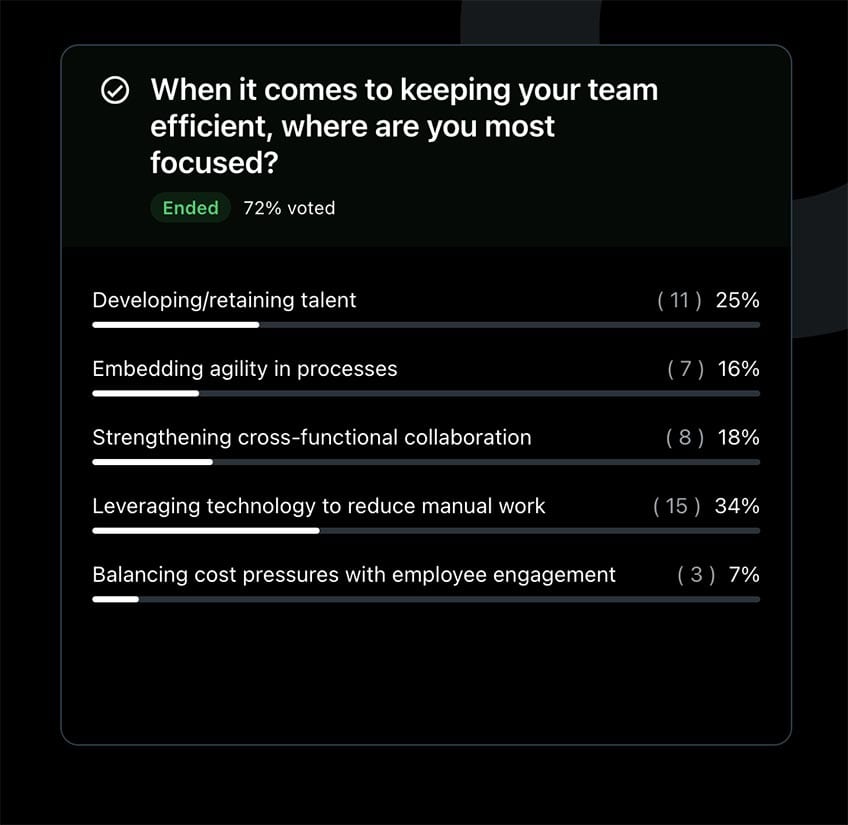
“We look for highly transactional processes… very repetitive, very painful for the team,” Sacasa explained. “That’s where we start building agents.”
As these manual burdens are lifted, finance teams gain the capacity to focus on analysis and decision support—shifting from data entry to data strategy.
Scaling Without Burning Out Your Team: Tech + Talent Webinar Lessons
A recurring theme throughout the webinar was sustainability. Automation shouldn't be about pushing teams to work harder; it should be about redistributing effort to prevent burnout.
Clark shared a practical strategy for getting buy-in: “When you try to tackle too much, you’re not going to have buy-in from your staff, and it’s going to be overwhelming. So I start with, ‘What is one of your pain points?’”
By engaging teams directly and focusing on small, high-impact improvements, finance leaders can reduce friction while building confidence and adoption.
Designing Finance for Scale and Resilience
Perhaps the most critical takeaway for growing organizations was the shift in operating models. Rather than choosing between in-house teams, automation, or outsourcing, the panelists described increasingly hybrid models—combining internal leadership with external expertise and scalable tools.
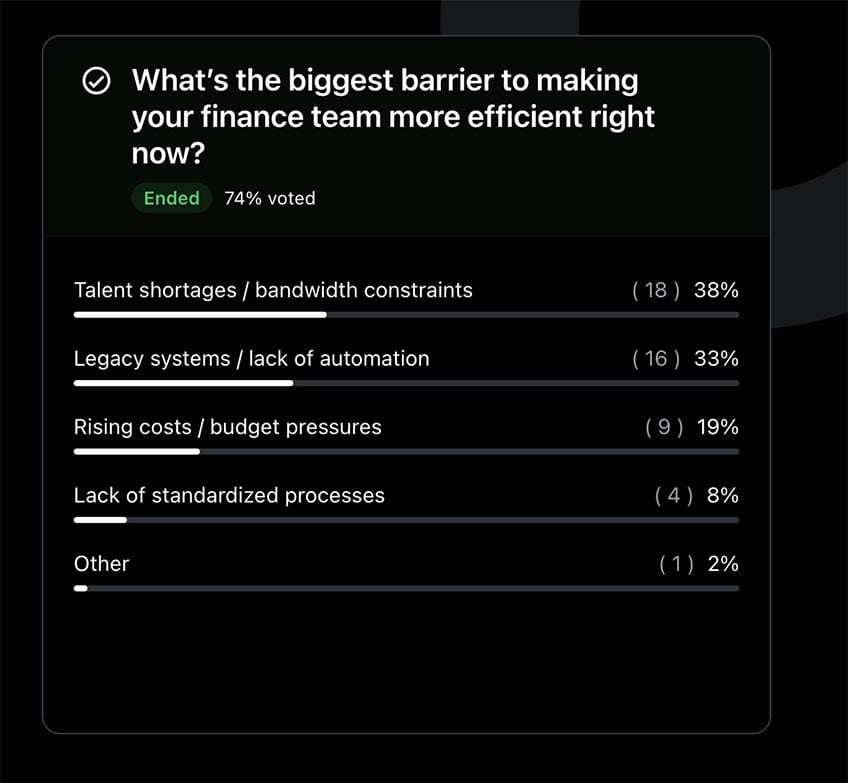
“Is this something we can do inside? Do we have the expertise? Or do we need to outsource it and gain that knowledge there?” Clark asked, outlining her evaluation process.
Sacasa added that this mix often depends on scale: “When it’s a micro solution, we’re building agents. When it’s more macro, we’re buying off-the-shelf solutions and modifying our processes to fit.”
Looking Ahead
The most effective finance organizations aren’t chasing technology for its own sake. They are redesigning how work flows across people, platforms, and partners—intentionally and incrementally.
As Melissa Clark noted in her closing thoughts, the goal is clear:
“Let’s really get to work… figure out where we need to implement this so we can make our lives easier, be more efficient, and be that key financial decision-making arm for the company.”
Watch the full webinar below.
Stay tuned for more upcoming in-person and virtual events, and make sure to visit our resources hub for more insights.
We hope to see you next time!


