


In this episode of CFO Weekly, John Glasgow, CEO & CFO at Campfire, joins Megan Weis to explore the mindset of the chameleon CFO, discussing how leaders must adapt their focus at every stage of growth to balance financial discipline with product innovation while operating in dual leadership roles. John brings unique insights from his distinguished career holding finance leadership positions at prominent companies like Bill.com and Adobe, where he mastered the intersection of financial strategy and product development.
With his extensive background spanning corporate finance, mergers and acquisitions, business development, and pricing strategy, John shares how finance leaders can evolve from transactional gatekeepers to strategic partners who drive cross-functional value. Currently serving as both CEO and CFO at Campfire, John oversees the development of an AI-native ERP platform that helps finance teams automate repetitive work and focus on strategic initiatives, having raised over $100 million primarily from Excel.
Show/Hide Transcript
Megan - 0:15: Today, I'm chatting with John Glasgow, the CEO and founder of Campfire, an innovative AI native ERP platform designed to revolutionize financial workflows for tech companies. With a distinguished background in finance, John has held leadership roles at prominent companies like Bill.com and Adobe. His experience spans across financial strategy, mergers and acquisitions, business development, and pricing, giving him a unique perspective on the intersection of finance and product development. Today, we'll dive into John's entrepreneurial journey, the challenges of balancing CEO and CFO responsibilities in early stage companies, and how finance teams can navigate fast, high impact decisions. John, thank you very much for joining me on this episode of CFO Weekly.
John - 1:38: Thank you for having, Megan. I'm thrilled to be here.
Megan - 1:40: Your career spans product leadership, financial stewardship, and ultimately the rare vantage point of operating as both CEO and CFO. And few leaders understand the tension and the opportunity between innovation and fiscal discipline the way you do. So today we want to explore that intersection: how finance can be a catalyst rather than a constraint, how product teams can make smarter bets, and what it truly means to build a company where strategy, numbers, and customer value stay tightly aligned. So to begin with, let's go back to the foundation of your perspective. Can you maybe share a moment early in your career that shaped how you view the role of finance in driving innovation and growth within a company?
John - 2:25: It's a great question. And so I'd say super early in my career, for those that remember the iPod, dating myself a little here, my brother and I had an iPod accessory ecommerce business, and it was incredibly formative for me. We were selling iPod cases and accessories for this predates the iPhone, of course. And we quickly learned that, like, we were not the low price leader. We didn't have the volume to do that, but we really tried to build a connection with customers and having really good customer experience. And one funny story is, like, we got a customer service call, and I was in class, and I stepped out to go to the bathroom and just support a customer on a question they had as they were buying an iPod case. And so I think winning on value and finding some wedge or edge and not just on price, even in a largely been commoditized, ecommerce, was something that we found we were good at. And so from a finance perspective, like, really thinking through premium pricing and then delivering a premium experience, but you have to be very intentional at delivering on both. Otherwise, it doesn't work. That was one that stood out in my formative days.
Megan - 3:34: Well, I can remember the Sony Walkman. So
John - 3:37: Okay.
Megan - 3:37: I can definitely date myself. So building on that early insight, you've since held roles that often sit in tension with one another. And you've sat in both seats, the CFO who protects margin and the product leader who pushes innovation. So how do you personally decide when to sacrifice short term efficiency for long term product value?
John - 3:59: It's another great question. I think a lot of it comes down to even when I was at big public companies in the finance team, there were some things like a billboard campaign, or there were times where we just had to throw out the financial model, and we just really had to trust and believe. Taking those moments, particularly now in an early stage startup, whether you're purely in finance or you're driving company strategy and finance like I do now at Campfire, you truly need to understand, like, when to really dig in on the numbers, when to do less so. And but either scenario, you need to constantly iterating and learning. I think the key thing is, like, what is our thesis for the billboard campaign that doesn't have a model or some new product category that does a financial model, and how quickly can we see if the thesis came true or not? And then quickly, what have we learned, and now what do we do differently? I think either scenario, you need to have that mindset. And so as I wear the finance hat here and that strategy hat, it's constantly bringing the mindset of testing and learning. And, yes, I push the team of, like, hey. This might be out of budget on this thing, or, hey. Let's just go for it. Let's learn, and then we're going to go from there.
Megan - 5:13: And before we go any further, let's just take a step back. Can you tell us a little bit about your career and Campfire, where you are today?
John - 5:22: Absolutely. So early career, went to school for finance and spent some time in investment banking, the classic New York tour in investment banking. Otherwise, I've been in the Bay Area really my whole life. And largest client was Magento Commerce. We got acquired by Adobe, and they brought me in house. And so I then joined the finance team at Adobe in the enterprise marketing cloud. And that was big company experience on the corporate finance team. Learned a lot. My manager went to be the CEO at Invoice2Go. It was a series C scale up and did a little bit of everything. Did finance, did corporate development. We were buying companies, selling companies, raising capital, and then also did partnerships. And that was my first time on the revenue side. So learned a lot there about carrying a number and call it more of the revenue stack. And we were acquired by Bill.com for $625,000,000, learned a lot through that acquisition, spent a couple years then leading partnerships, Bill.com, reporting to the CFO, and really saw a lot of acute pain as an ERP customer and then as a partner at Bill. And so went through the startup accelerator, Y Combinator, to build Campfire, which is a modern ERP for the mid size and lower enterprise businesses, and we've gone on to raise north of $100,000,000 in funding primarily from Excel. And so it's something that, as a former finance leader, we now sell to my peers. I'll go to a finance center, and it's fun to just sit down and break bread with folks where I used to truly be in their seat, and I still am here as the CFO at Campfire, but ultimately sitting in their shoes. We could talk shop all day, and it's super fun building the ERP I wish we were on as we scale.
Megan - 7:10: And let's focus on early stage companies for a second where speed and discipline collide every day. So at early stage companies, there's often pressure to grow fast while building a financially sound foundation. So what decision frameworks help you to avoid growth at all cost thinking without slowing down momentum?
John - 7:30: The first two when you think about venture funding, you're largely gated until the next milestone. And so call it seed, series A, series B. You go through the alphabet. You solve to the next gate, and you clear the next gate, and then you're largely raising capital again that gets you to the next gate. And so when I think about different stages, you need to almost shift a little bit back towards when I was at a large public company. So in the very beginning, other than burn rate and running out of money and just getting ARR going, which is our North Star, nothing else mattered. Unit economics didn't matter. Coming out of Y Combinator, the principle was, like, make something people want and do things that don't scale. And you think at a large public company, you're not building a lot of new things from scratch. You're largely very mature products, and everything has to be scalable to an extent. So literally the other end of the spectrum. And then post series A, we started to track our numbers a little bit. We got a CRM. We started to look at deal velocity. We started to learn a little more from a metric standpoint. Now as a series B company, we've shifted a little bit more towards that maturity curve and sold to, like, rebuilding Campfire back into where I was a couple times now on the finance team public companies. And so as we shift in that direction, I constantly push the team and shift how we think and continue to build our team in that direction. It's been here innovation on day one and then slowly working our way to build the financial muscle and rigor that we need as we grow.
Megan - 9:04: And of course those pressures intensify when you're holding dual executive responsibilities. So as a CEO CFO hybrid, how do you balance between customer driven product demands and the cost discipline needed to create a scalable business model?
John - 9:20: We are incredibly well capitalized having raised $100,000,000 in funding over the summer, but I still really push the team, and I wear my finance hat a lot here, really push the team on what is the core metrics. Or I'd say I try not to be what they call, like, a CFNo, saying no to a lot of stuff. I really ask them the tough questions. And once they clear the tough questions, sometimes they come back and say, hey. You asked a lot of great questions, and we decided just not to do this. And your points made a lot of sense. Like, we were not able to solve for some of the concerns that you had. So they'll largely come to the yes or no on their own. And if they do clear through the questions and everything makes sense, then we, of course, proceed. Or occasionally, we just decide this is unaddressed. But going back to my point earlier, we're going to learn from this thesis and we're going to measure. And so, ultimately, everything comes down to measurement at some point as some new thesis grows. So I think that continues to be an area where I really push the team as the CFO here.
Megan - 10:23: And prioritization is another area where finance and product often need a shared language. So when evaluating product features or roadmap priorities, what financial signals matter most? Is it payback, revenue expansion, retention, or something else?
John - 10:40: It really comes like, when we were Invoice2Go raising our $100,000,000 series D, it really come back. There was an incredible focus during the raise and on us around our customer cohort waterfalls. And looking at, like, we raise $100,000,001 into the marketing machine, what does that get us in return? Over call, like, LTV to CAC or payback as you described or really any way you want to slice and dice. $1 in, what does it get us in return? And then are there certain cohorts that have a higher return for that one dollar? And then how deep are those markets? We quickly found that certain channels and customer segments for us were not actually that deep. There weren't a lot out there from a market sizing perspective, but some that were. And so when you're raising later stage larger capital, there is more intense focus on the efficiency of the spend and then ultimately the depth of the market because you're now raising kind of large sums of capital. In the early days, Y Combinator, they were like, you just need to convince investors that you have a 1% chance of getting to a billion dollars in annual revenue. And so, of course, there's a lot of vision selling, but ultimately, you need to demonstrate you can step into a larger market irrespective of the customer, call it lifetime value, irrespective of payback. On our early rounds, there was zero measurement of that at all. In the very beginning, it was just like, is this the right team? And even if they end up pivoting, because many companies end up pivoting in early days, it is just like a team that's just going to be phenomenal irrespective of the category. And so we have continued to evolve more towards what I described at that series D. But I think I remind founders that you really need to be a chameleon, and you really need to focus, and CFOs need to be a chameleon as well. As a CFO, you've got to evolve on your focus and what we say yes to and what we say no to because every round of funding, your role changes.
Megan - 12:42: And congratulations on that $100,000,000, by the way. But I'm just curious to know, what is it that you love about working for a early stage or startup?
John - 12:51: I just love building. Even as the CFO here, an incredible amount of what I do in that hat is just building, building something from zero, helping the team grow faster, helping them do it more efficiently. Again, not being CFNo, but helping them make sure they thought through things that ultimately, as the finance leader, you want everybody bringing things to you that maybe even aren't even in your remit. It's like, hey. John gives great feedback, or they really helped me think through this snarly problem last time. They were just, like, were whiteboarding with me on this billboard campaign or whatever it may be. I think just, like, we don't look for people that have, like, strategy all over the resume. We look for people that are just ready to roll up their sleeves and execute. And so for me, the early days are just pure execution. That's probably the part I building and executing are essentially the part that I enjoy the most.
Megan - 13:45: And let's talk about collaboration between teams. So in your view, when should finance step into product pricing decisions, and when should product teams own experimentation without financial gatekeeping?
John - 13:58: I would say finance should always be involved. Now as a finance leader at Adobe, I quickly learned a lot of folks didn't even understand what I did in strategic finance. So I actually built a one slide, and I said, this is my charter. And I went and evangelized across the business of here's my charter, and here's how I can help you. And one of them was before you launch anything on pricing, even if it's the very first positioning of a price, a, downstream, can we operationalize this? B, is there a path to the math ever making sense on this? And so I think putting some folks, again, not saying no necessarily, but helping them think through that as we scale and as this goes through, we've got to just think through some core questions that are going to allow us to really build something big and meaningful here. But these are some of the things we're going to have to not solve upfront, but at least think through upfront. So as a finance leader, hopefully, you're always being involved in pricing and packaging. And if not, go build that charter and go evangelize to the product org.
Megan - 15:06: And early stage companies, they frequently delay building financial infrastructure until they start scaling. But based on your experience, what financial systems or processes should be implemented much sooner than most founders realize?
John - 15:21: Well, we certainly got to pay taxes, and you got to have some core set of financial records. For the finance folks out there and the founders out there, if you haven't hired one yet, certainly get the table stakes. We got to have an income statement. We got to have three statement reporting, ideally from day one just so you can do the basics like taxes. I would say after that, then you get into some materiality, at least in the US, you get sales tax. And so then we have some just like peer minimum requirements. You also want to think through, like, what's your North Star? Is there a North Star financial metric? For us, it's ARR annual recurring revenue. But what's that financial metric you really want to rally the company around? And maybe there's a few. I had talked into someone the other day, and they had a 180 KPIs at the company. The letter K there on key, like, how can you have a 180 key performance indicators? And so, ultimately, one to three. I call it ideally a single North Star. And beyond the taxes and just some of the table stakes items, you really rally everyone in the all hands and others around that. And then, again, as you go through the maturity curve of a business, you start to build more financial rigor and muscle and build the finance function out so you have more measurement. And then as you have more capital, more measurement essentially becomes required so you can really understand the efficiency of capital and start to have a budget. So we have budgeting at Campfire, but I would use it more of, like, budgets are theoretically never perfectly accurate. There's always something that's a little off. So use it more of going back to when mentioned earlier, like, what are drivers of the business? If you're a sales led, one rep gets us X amount of new ARR. It really helps you think through levers of, like, if we need to hit this revenue plan, what does the team require to get there? And so the budget doesn't be perfect, but it does help you have a lot of these deeper conversations of how do we deliver on strategy by actually starting with the financial side.
Megan - 17:21: And do you have any advice on just how you can stay, like, maybe a couple steps ahead of the growth without overinvesting or getting SAP when maybe something lesser would have done? How do you just stay a couple steps ahead without blowing the budget?
John - 17:38: I would not step too far ahead. I prefer to stay slightly behind. You want a little bit of pressure, and I talked to a lot of folks at companies just larger than us. And the finance teams, a lot of them are actually saying you really need to understand what your next quarter of hiring needs to look like, but don't hire too far ahead. Hire just behind. That's actually something that has been formative for me as I think about hiring at Campfire.
Megan - 18:09: And what are the most common mistakes that you see early finance leaders make when they influence product strategy, especially around maybe monetization and customer segmentation?
John - 18:21: Don't get too cute too early. I think you can really slice and dice. Particularly if you've come from a big company, you can really put a lot of structure and rigor on the team. But people go to startups, and a lot of it is like, hey. I left the red tape behind at BigCo. So the finance team comes in and very opinionated. Here's how we're going to do things, and there's this matrix, and here's very strict rules that we're just trying to survive as a company, and we're putting a ton of structure and rigor on that. I think there is unnecessary levels of friction that really I try and more of fine tune and prune. Hey. We are way too aggressive on a price point here. Let's put a little structure around that. Or we signed way too long of a deal. Let's be a little more thoughtful and put some structure around that. But we don't want to start with too much structure. We're just going to learn, and it's okay to make a few mistakes along the way. But we're going to learn and we're going to fence off and build some parameters when it becomes a little more of a theme ideally and not proactively before it is a problem at all.
Megan - 19:23: And your role at Campfire gives you a unique vantage point on what finance teams truly need and what they don't need. So Campfire is building a platform for finance teams. How do feedback from customers and your own financial leadership experience shape what you don't build or intentionally leave out of the product?
John - 19:44: It's a great question, and I literally think about this every day. Ultimately, I founded Campfire to solve my own problems as a finance leader. Just like we really were looking for modern ERP, nothing existed, and so really building for myself. But I also knew a lot of things that I did not want in my ERP and things that I really thought should be elsewhere. And so I did come in here very opinionated of here's who we are in Campfire, a general ledger, and a kind of corresponding subledgers. And here's a lot of things we're not, like financial forecasting and planning, for example, and very opinionated that should be elsewhere. Now many customers, of course, they shape and drive a lot of our roadmap, whether it's us being a Campfire. We were the first customer at Campfire, of course. So whether it's us as a customer, like when I was out fundraising, wearing my CFO hat for series B, using Campfire for all of the diligence, and that was my big pain in a prior life that was the kernel for the founding here. And so giving the team a lot of feedback, like, as we went through a fundraise, here are some things that we can learn from for the next one, and I think all of our customers will benefit from it, versus like, hey, here's something that actually we should not I'm not going to put on the team. But there is such thing as overwhelming your team, any team, with guidance and feedback and creating a lot of whiplash. And so thoughtfully at the right time, bringing things to them, whether it's customer driven or internally or just my idea when I can't sleep at night, you just want to be very thoughtful because particularly as an executive in a company, people jump through a lot of hoops to deliver when you put in an ask. And so trying to be thoughtful on those is something I have learned to hold myself back a bit on some of the feedback and save it for a later date.
Megan - 21:32: And you just mentioned a modern ERP. So what does that mean to you? What makes an ERP modern?
John - 21:39: I would say ease of use is just from a core standpoint, making it so easy to use. It's like your Spotify or a consumer grade application, but at the same time, get folks the depth and the power and the scalability, whether it's to go public or build a large business and go through audits or build a global business from a multi entity and multicurrency approach. Giving you that ease of use with the power, I think, is how I think about modern. Because, ultimately, I talk to so many teams that say and again, I was this individual in a prior life. Like, we've been in our ERP for years now. The team still doesn't use this one feature. Like, we still don't use custom reporting. We're still not using one of the subledgers. We can't figure it out. It's too hard to set up. And so really allowing folks to use the full depth and breadth of the platform is something I spend a lot of time thinking about.
Megan - 22:38: And we've talked about fundraising. So how does the intersection of finance and product storytelling change the narrative investors respond to most? What numbers and product vision need to align?
John - 22:51: I would say the numbers and product vision need to align. Obviously, the fact that I own both is great because then I can do a lot of, like, bottoms up and top down planning. I can think through the products that are going to help product launches or features or go to market changes we're going to make that could deliver on the financial plan. Now one thing I'll probably be better at, which is, like, a lot of this lives in my head. Since I own both, I inherently don't need to write it down as much. And so I think just like whether you're just a CFO or you've got multiple hats, many bosses like CFO and COO or you have other organizations on your team, sometimes the broader your remit, the less you institutionalize and share out with others. And so I think a lot of this is putting it down for internally and externally, like investors or customers, so folks can understand the vision and understand the numbers and so they can actually execute against that. That's one that comes to mind there.
Megan - 23:50: And finally, let's bring it back to people, the next generation of finance leaders stepping into this blended world. If you were mentoring a first time CFO at a fast growing startup, what one habit would you help them build to ensure that they become a strategic partner in product decisions and not just a financial controller?
John - 24:10: I would really measure the amount of time you're spending with cross functional teams, like sales or marketing or product, and the amount of time you're sitting there editing a spreadsheet or creating a chart, the less time you spend, call it in, just siloed in finance land, and the more time you spend out in the field. And again, going back to my comment earlier about, like, I built a charter and I really evangelized the finance function across the organization. Otherwise, people may not understand you even exist or how to work with you or I didn't know they could help me get there. But I tell early career finance folks that if all of the cross functional leaders hit their plan, then the company hits financial plan. And, ultimately, your goal is to hit the plan that you delivered and to the board or to your executives or just internally. And so getting them there, whether it's you personally or pushing others around them, like biz ops or sales ops, to get them there is your goal. Yeah. And as a shareholder, it's like, ultimately, whether you're private or public, it's to maximize shareholder value. If that's the best way to maximize shareholder value of getting others to go and not editing a spreadsheet, the model doesn't need to be perfect or skip the footnotes, but go build the model with the CMO or go spend time. One very tactical example, in a prior life, we had a very aggressive financial plan. Marketing was given a huge number to hit in terms of the number of qualified leads. And to get there, they actually lowered the quality of the leads. And so sales came to be complaining and saying, because I asked sales, like, why is your conversion rate so low? Is something wrong with the team? Is there product positioning or pricing? We're just getting a lot of bad leads from marketing. So then I went with marketing, and marketing's like, our goal is so high. We've had to rethink how we go find these leads. And so we actually had to go back to the board and say, like, we need to revisit the entire plan, and we need to get marketing something where they can drive quality to sales. And by being out in the field and making myself available, right, I was able to be a kind of front and center of this call financial plan transformation that we went through. So the back half of the year, we were able to hit plan, but it really took me being out in the field meeting with other folks to do that. So that's a long answer for you. But it's really, like, AI is not going to automate you getting on a call or in person with CMO and really digging in of what is not working and then going and executing and delivering on that.
Megan - 26:50: John, your perspective illustrates how deeply intertwined finance and product have become in modern high growth organizations. You've shown how thoughtful frameworks, cross functional trust, and the right financial infrastructure can unlock not just better decisions, but better companies. So as we wrap up, let's look toward the horizon. So when you're looking ahead, what defines the future ready CFO, both in terms of critical new skills and mindset?
John - 27:18: For our customers and for myself, I think about this one a lot because ultimately, we are delivering a lot of the next generation called the modern, the AI native ERP for our customers. And so many of our customers are rethinking at the core the corporate finance and accounting function now that they're offloading a lot of these tasks to software or to AI. My big push and advice to be a future ready CFO and something I'm doing for myself to future proof is what are the tasks that you or your team are just performing over and over again, like a monthly or even a weekly or even daily visibility chart or anything that's caught repetitive in nature that is manually being performed, go and automate it. Because AI or some level automation should be taking that on anyways. And so get that out of a human, and the human is reviewing the work and still responsible for the work like anyone else on their team. But ultimately, getting them out and spending time with peers, cross functional leaders, delivering strategic value across the business is going to be really where this role focuses. And then ultimately, at the end of the day, you're then improving revenue, you're accelerating faster, improving profitability, driving efficiency. And that's when people get raises. That's when people take the next step up on their career is those visible value adds to the business. And it could even be a new procurement tool. People don't love procurement tools, but ultimately, it's like driving efficiency across the business and not the repetitive called transactional finance and accounting work. I would get out of all that as much as possible, find tooling like a Campfire to help with all of that and go focus on adding value.
Megan - 29:14: John, thank you so much for being my guest today.
John - 29:16: I was honored to be here. Thank you for the time.
Megan - 29:18: Really enjoyed your insights and this thoughtful conversation. And to all of our listeners, please tune in next week, and until then, take care. You've been listening to CFO Weekly presented by Personiv. Please subscribe wherever you get your podcast to hear all of our episodes. Want to learn more? Check out personiv.com. Thanks for listening.
What You'll Learn:
-
Why CFOs must evolve their focus at each funding stage from seed to Series B and beyond
-
How to balance customer-driven product demands with cost discipline for scalable growth
-
The critical frameworks for evaluating product priorities through financial signals
-
Strategies for building financial infrastructure without overinvesting too early
-
How AI and automation enable finance teams to shift from transactional to strategic work
-
The importance of cross-functional collaboration in maximizing shareholder value
Key Takeaways:
Value-Based Competition
Early entrepreneurial experiences demonstrate that winning on value and customer experience creates sustainable competitive advantages over competing solely on price. Premium pricing paired with exceptional delivery builds customer loyalty even in commoditized markets.
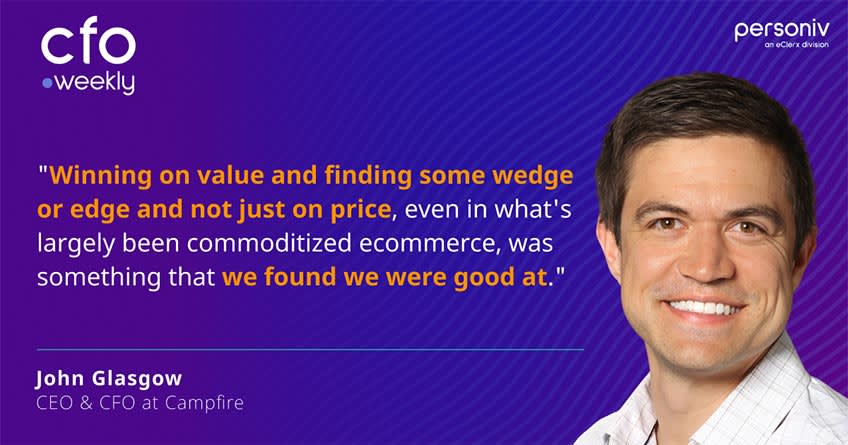
"Winning on value and finding some wedge or edge and not just on price, even in what's largely been commoditized ecommerce, was something that we found we were good at." Glasgow mentioned. - 00:02:25 - 00:03:34
Strategic Questioning Over Gatekeeping: A Chameleon CFO Trait
Effective CFOs ask tough questions that help teams self-evaluate decisions rather than simply saying no. This approach empowers cross-functional leaders to think through financial implications while maintaining momentum on strategic initiatives.
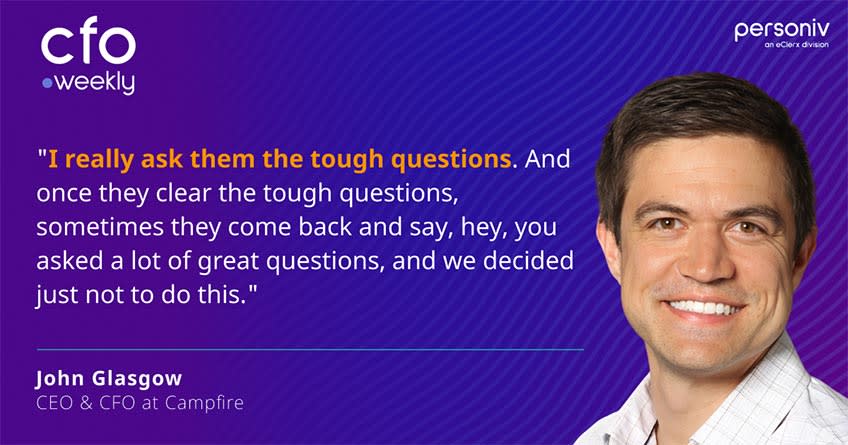
"I really ask them the tough questions. And once they clear the tough questions, sometimes they come back and say, hey, you asked a lot of great questions, and we decided just not to do this." Glasgow commented. - 00:09:04 - 00:10:24
Building and Execution Focus
The most fulfilling aspect of early-stage finance leadership comes from pure execution and building systems from zero. Finance leaders who position themselves as collaborative problem-solvers become trusted advisors across all business functions.
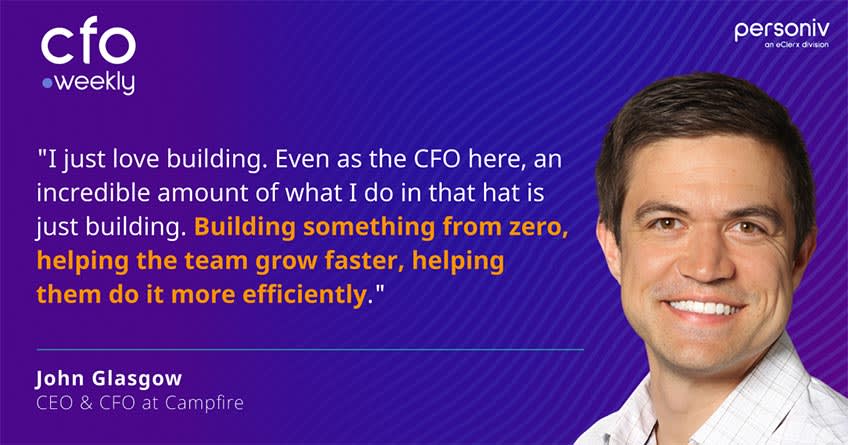
"I just love building. Even as the CFO here, an incredible amount of what I do in that hat is just building. Building something from zero, helping the team grow faster, helping them do it more efficiently." Glasgow shared. - 00:12:43 - 00:13:46
Cross-Functional Value Creation
The most impactful CFOs spend less time editing spreadsheets and more time collaborating with cross-functional leaders. When sales, marketing, and product teams hit their plans, the company achieves financial targets and maximizes shareholder value.
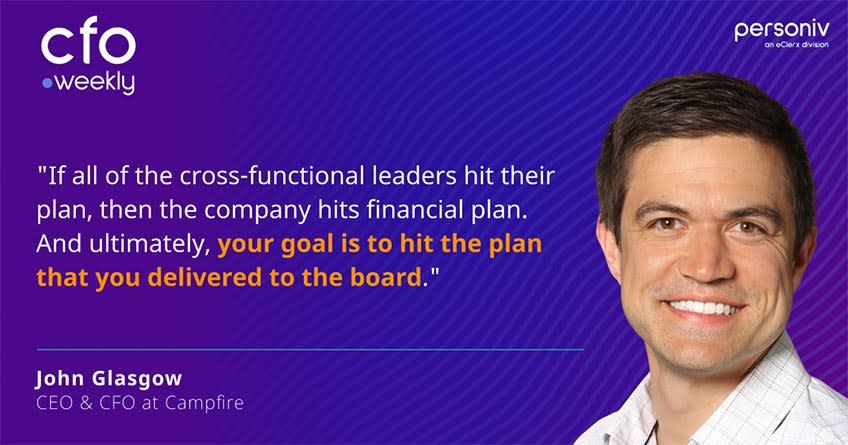
"If all of the cross-functional leaders hit their plan, then the company hits financial plan. And ultimately, your goal is to hit the plan that you delivered to the board." Glasgow noted. - 00:24:11 - 00:26:51
The Chameleon CFO
AI and automation should eliminate repetitive transactional work, freeing finance professionals to deliver strategic value across organizations. Future-ready CFOs focus on driving revenue acceleration, improving profitability, and implementing efficiency initiatives rather than manual processes.
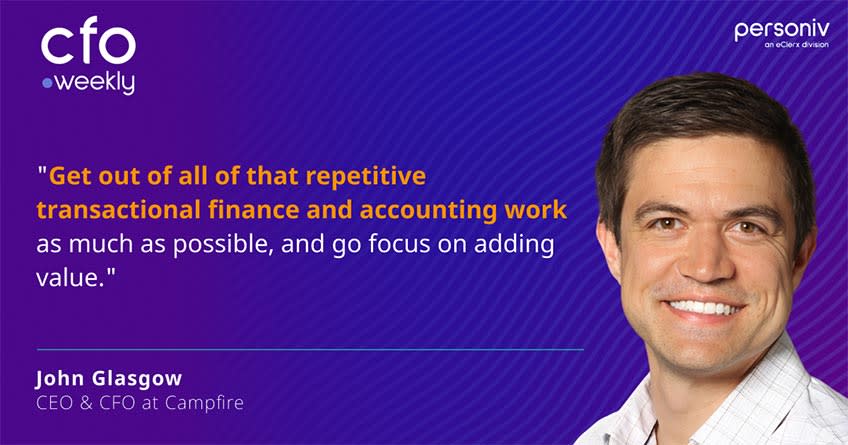
In Glasgow's words, "Get out of all of that repetitive transactional finance and accounting work as much as possible, and go focus on adding value." - 00:27:19 - 00:29:15
Want more insights? Explore our full library of podcast blogs here.
To listen to the full conversations, check us out on Apple Podcasts, Spotify, and our RSS or your favorite podcast player!
Instructions on how to follow, rate, and review CFO-Weekly are here.
Ready to adapt to any business challenge? We deliver premier financial and accounting solutions tailored to help your CFO navigate growth stages and drive value. Drop us a line today to learn more.


