

From AI and automation to talent and business growth, finance leaders are navigating competing priorities. Here are six lessons from our recent CFO Leadership LIVE event focused on rethinking how finance works.
The CFO’s job has never been simple. But lately, it seems like the list of responsibilities just keeps getting longer.
Drive growth, but control costs. Invest in technology, but manage risk. Build a high-performing team, but keep headcount in check. And somewhere in between, find time to help the business make better decisions.
Sound familiar?
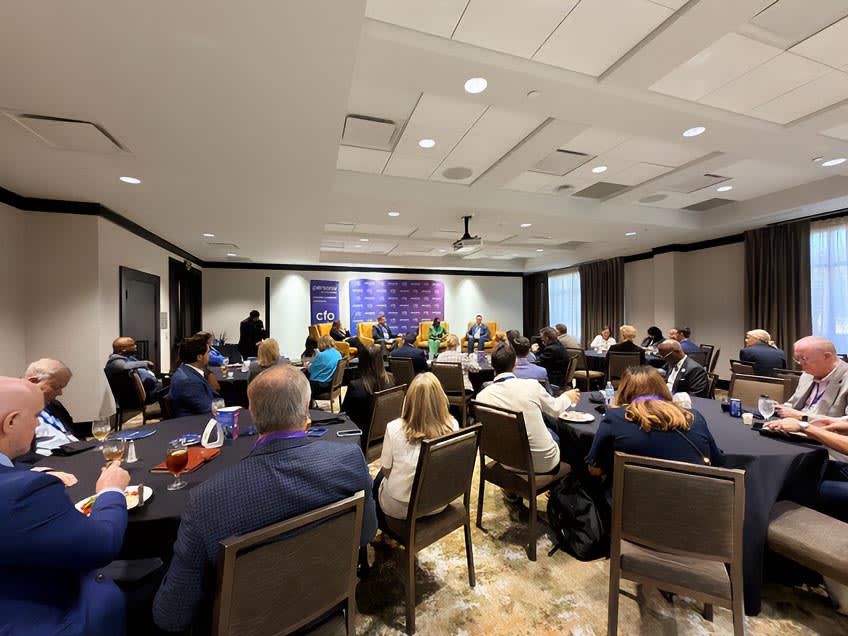
At Personiv’s recent "rethinking how finance works" event in Dallas, I had the opportunity to bring together three experienced finance leaders for a candid conversation about these challenges. Our theme was The CFO’s Tightrope: Balancing Growth, Risk, Talent & Technology.
Despite working in different organizations, the three leaders faced a common challenge: how to keep pace with the business without constantly adding more resources. The answer isn’t simply to do more with less. It’s to rethink how finance works so teams can focus on what matters most.
Here are six takeaways from our conversation that I think every finance leader should consider.
Finance Is No Longer the Department of “No”
One of the most important themes was how finance leaders balance growth opportunities with financial discipline. We’ve all heard finance described as the department of “no.” But I think that perspective misses the real value finance can bring to the business.

One panelist offered a different way of looking at it:
“It’s not really a no. It’s a what must be true to get where we want to go.”
I love that distinction. Maybe an opportunity requires different pricing strategy, operational efficiencies, or determining whether an investment makes sense. Rather than simply rejecting the idea, finance can help leaders identify the conditions that would make it successful.
It requires a broader understanding of the business. Strong relationships across functions and ability to ask the right questions. The most effective finance leaders aren’t just protecting the bottom line. They’re helping shape the decisions that drive it.
My takeaway: Finance creates more value when it helps the business move forward with clarity and discipline, rather than focusing only on what to avoid.
Before You Add Technology, Understand the Work
Just because new technology is available to transform the finance function does not necessarily mean that investing in a new system is the answer. One theme that came through clearly in our discussion was the importance of understanding the work first and identifying what needs to change before deciding which technology, if any, is needed.
To get the most out of their tools, companies should first take a step back and look at what they need to achieve, what they can already do, and what they're trying to fix. For smaller finance teams, it's as simple as asking: are we using the technology we have to its full potential?
One practical approach that stood out involved a detailed cost study designed to understand where work was happening, how long it takes and where resources were being consumed. This exercise can reveal opportunities to improve the process before introducing another platform.
That brings me to one of my favorite observations from the discussion:
“We really have to understand the work before we can promote those types of decisions.”
Many organizations are drawn to the promise of new technologies that claim to solve their big problems. These organizations invest in a tool before fully understanding the processes they are trying to improve, and it results in automating inefficiencies instead of fixing the underlying problems of a business process.
Technology absolutely has a role to play. But the key to getting the best results is to start by looking at the problem we're trying to solve. Then, we can figure out the best way to fix it.
My takeaway: Start with the problem, not the platform. Understanding the work makes it easier to identify the right solution.
The Finance Capacity Challenge Isn’t Always a Hiring Problem
We talk a lot about the accounting talent shortage, and for good reason. But sometimes the bigger challenge isn’t finding another accountant. It’s figuring out how to use the talent you already have more effectively.
One approach discussed during our panel was shifting routine finance activities to an outsourced model and building a small team inside to work on important projects. This way, finance professionals can spend more time on the work that protects earnings, supports growth, and creates value for the business. It's about using their skills to make a real difference, rather than just doing everyday tasks.
But another point from the discussion really resonated with me. When teams are overwhelmed, the first thing that comes to mind is usually hiring more people. But that's not always the best solution. A good leader can make a huge difference just by helping their team figure out what's really important and focus on that.
“It really does take the leader of the team to help deprioritize.”
I think that’s such an important point. Sometimes the most valuable thing a finance leader can do isn’t approve another hire or another technology investment. It’s helping the team focus on the work that actually matters.
What is absolutely important to get done today? What can wait until next week? What work is consuming time without creating meaningful value? Where do leaders need to step in and change the way things are being done?
Of course, there are times when additional resources are necessary. But hiring, outsourcing, automation, and process redesign should all be part of the conversation.
My takeaway: Creating capacity is as much a leadership decision as it is a staffing decision. Before adding more people, take a closer look at how your existing team’s time is being spent.
AI Should Make Finance Professionals More Valuable, Not Just More Efficient
We couldn’t have a conversation about the future of finance without talking about AI. And while there’s plenty of excitement around what AI can do, I was encouraged by how practical our discussion was.
Finance teams are already using AI to support documentation, budgeting, research and other repeatable activities. But the conversation quickly moved beyond automation to a more important question: Where do we still need people?
One panelist put it this way:
“AI is very helpful, but the human review is still critical.”
AI can help teams process information, identify patterns and accelerate routine work. Human judgment is still essential, particularly when interpreting results, assessing business implications and making decisions that carry financial or operational risk.
We also talked about the importance of governance, data security and understanding how AI tools handle sensitive company information. Those aren’t reasons to avoid AI. They’re reasons to implement it thoughtfully.
For me, the real opportunity isn’t simply to automate more accounting work. It’s to help finance teams focus on rethinking how finance works, the key theme of our event, by using technology where it adds value while preserving the expertise and accountability that good financial decision-making requires.
My takeaway: The goal shouldn’t be to remove people from every process. It should be to use technology where it works and preserve human expertise where it matters most.
The Finance Team of the Future Needs Different Skills
Here’s a question I think more finance leaders need to be asking: If AI and automation continue to take on routine accounting work, how will the next generation of finance professionals develop the experience they need to advance?

Traditionally, many finance professionals built their careers by working through transactional processes, developing technical knowledge and gradually taking on more complex responsibilities. As those processes change, we need to rethink how people gain experience and prepare for broader roles.
Our panel explored the value of building more versatile finance teams, with professionals who can move between responsibilities as their business needs, ask thoughtful questions and understand how their work connects to the wider organization.
Another approach I liked was setting aside dedicated time each week for employees to upskill, experiment with new technology, share knowledge and ability to think beyond the numbers.
“Learning has to be put on the calendar just like everything else.”
I love how practical that is. We can talk all day about upskilling and preparing teams for the future, but if we don’t make learning part of how our teams operate, it’s unlikely to happen consistently.
My takeaway: The finance team of the future will need both technical skills and ability to go beyond the numbers. Invest in curiosity, adaptability and continuous learning, because technology will keep changing, and our teams need to be ready to change with it.
Better Decisions Don’t Require Perfect Information
One of the realities of finance leadership is that we rarely have all the information we’d like before making a decision. And waiting for complete certainty can sometimes be just as risky as making the wrong call.
During our discussion, we talked about the importance of understanding the broader business, assessing potential risks and determining whether a decision makes sense based on the information available.
“Sometimes business moves fast and we cannot take time to analyze and get all the data to get a perfect answer.”
Leadership is all about making tough decisions, even when things are uncertain. You can’t wait until you have all the facts, but you can understand the risks, get the right people into the conversation and establish a clear point to evaluate whether you’re on the right track.
I also liked a practical approach to managing uncertainty: When you need to make a decision, set a specific time to revisit it. Maybe that’s 30, 45, or 60 days later. The key is to create room to move forward without treating every decision as permanent. This way, you're not stuck with something that might not work out. By doing this, you can try things out and then revisit them to see what's working and what's not. It's a pretty simple approach, but it can really help you make progress without getting too caught up in making the perfect choice.
Business priorities are shifting, technology is advancing and market conditions can change faster than your planning cycles. We can’t always predict what’s coming, but we can take a more thoughtful approach to decision making, evaluating results and adjusting when necessary.
My takeaway: Good finance leadership isn’t about having perfect information. It’s about making thoughtful decisions, managing risk and knowing when to adjust course.
The Bigger Picture: Rethinking How Finance Works
To sum up the conversation from this Rethinking How Finance Works event, the future of finance isn’t just about doing more with less. It’s about being more intentional about how the work gets done.
That means looking beyond traditional organizational structures and asking some bigger questions. What work truly needs to stay in-house? Where can automation eliminate unnecessary effort? Where can outside expertise create capacity? And how do we make sure our best people are spending their time on the things that matter most?
There’s no single answer that works for every organization. But the CFOs who get this right will be the ones who think about people, processes, and technology as parts of one operating model, rather than separate initiatives.
At Personiv, we see this as an opportunity to help finance leaders build more flexible, scalable organizations by combining finance and accounting expertise, global talent and AI-enabled processes.
Because ultimately, the goal isn’t simply a leaner finance function. It’s a finance team that has the capacity, expertise, and agility to help the business move forward.
For more practical perspectives from finance leaders, explore Personiv’s CFO Weekly podcast and continue the conversation started at our event on the theme of rethinking how finance works.
About the Author
Follow on Linkedin More Content by Megan Weis, CPA, MBA


