


In this episode of CFO Weekly, Wassia Kamon, Chief Financial Officer at ACE | Access to Capital for Entrepreneurs, Georgia's largest nonprofit community development financial institution, joins Megan Weis to explore the journey from controller or FP&A leader to modern CFO, and exactly the experiences that best prepare finance professionals for the CFO seat. Wassia is an award-winning finance leader with more than fifteen years of experience across manufacturing, technology, pharmaceuticals, and the nonprofit sector, giving her a unique perspective on what it really takes to grow into the role.
Drawing from her time serving as interim CFO, joining a nonprofit board, and working with an executive coach, she unpacks the very different mindset shifts required as leaders step into the CFO seat. She discusses why building a personal board of directors is essential, why governance and team building matter just as much as technical expertise, and how to use AI as a tool while avoiding executive burnout.
Show/Hide Transcript
Megan - 0:50 Today, I'm joined by Wassia Kamon, chief financial officer at ACE, access to capital for entrepreneurs, Georgia's largest nonprofit community development financial institution. Wassia is an award-winning finance leader with more than fifteen years of experience across manufacturing, technology, pharmaceuticals, and the nonprofit sector. Her career has spanned both accounting and FP&A, giving her a unique perspective on what it really takes to grow into the modern CFO role. In this episode, we'll explore the journey from controller or FP&A leader to modern CFO, the mindset shifts that matter most, and how aspiring finance executives can prepare for a role that extends far beyond the numbers. Welcome back to the show, Wassia.
Wassia - 1:40 Thank you so much, Megan. Really glad to be back.
Megan - 1:43 Yeah. I'm super excited about this topic. I think it's going to be a fun conversation. Many finance professionals obviously aspire to become the CFO. That's probably the ultimate goal for many. So looking back, what experiences made the biggest difference in preparing you for that transition?
Wassia - 2:02 I will say three things. The first one was being an interim CFO for a couple months when I was controller. It really allowed me to see what else the CFO did because then you're like, what is the CFO even doing? I can do that. And then you get in and you're like, okay. I mean, I'll be as ready as I thought. So that was definitely an eye-opening experience for me because I was able to better understand the breadth of what is under a CFO. The other thing was joining a not-for-profit company as a board member. So I did that when I was director of FP&A actually at the time, and it really helped me because part of being a CFO is reporting to the board, reporting to the CEO. So being able to get those reps outside my organization really helped because you're at the table, you are able to influence the outcome, and you get to work with people that are not within finance and accounting. So that really helped change my perspective and understanding how a CEO really felt. Because CEOs are the hiring manager of the CFO, same as boards. And so being able to understand that perspective, understanding what are the things that typically stress out a CEO, what they expect from their teams, how they have to report to the board. So really understanding that really helped me from that. And I'll say the last thing was working with an executive coach. That one really accelerated my career because it allowed me to really elevate how I would communicate, seeing my blind spots, and being really seen as executive material from that point. So definitely, the three are being an interim CFO—I had that opportunity at the company where I was when I was a controller, and I felt like it would be an easy move. It wasn't. The second one was becoming a board member, actually treasurer of that not-for-profit, and then also working with an executive coach a couple years after that.
Megan - 4:01 So any advice for finding a seat at the board? Like, how did you go about finding that?
Wassia - 4:07 It was on LinkedIn. It was a not-for-profit board. It was an unpaid board at a local charity. There was a specific website too for volunteers for charities. A lot of charities are looking for board members, and I highly encourage people to visit that website as well. A lot of charities are looking in. So the charity I went for was called Hope, and we help single parents complete an education degree. And the reason it spoke to me was because my mom became a single mom. When my parents divorced when I was 15 years old, at the time, she wanted to go for a PhD, but then there was us, the three of us. And so she had to put that on hold. And so when I saw the cause, it really appealed to me. And so when I was going through the interview process, I could see that, yes, I wanted to have the experience as a board member, but it was also a cause that really resonated with me personally.
Megan - 5:02 Yeah. You can kill two birds with one stone, get the great experience, and work for a good cause. So from your perspective, what's the biggest mindset shift someone needs to make when moving from controller or FP&A leader into the CFO seat?
Wassia - 5:19 So definitely two different mindsets depending on if you came through the controller route or the FP&A route. I actually did both, so I was a controller, and then I did FP&A. From the controllership, I will say it's really under pressure that you see those habits that you need to change come through. So for example, if you're a controller, you are all about making sure nothing breaks. Everything ties up. We're compliant. You see the risk before you see the opportunity sometimes. And so when you are under pressure as a controller, some of your natural instinct is to dig deeper in the weeds to understand what happened. That's how you were great at what you did. And so your first instinct when it happens, you go straight into the weeds. And so maybe what helped you become a controller now will be a hindrance because you need to step out of that operator mindset in the right moment. Because you have to bring in—you have to be able to—this happened. Let me rise up and see the bigger picture. So you can bring judgment to strategy conversation. You can lead your people effectively instead of spending time in the accounting system trying to find out what caused the error or what happened. You learn how you can empower your team, have the right system to get those kinds of things, but really step up because the CFO requires so much more than just keeping the books together. When you come to FP&A on the other end, you work closely with executives. You probably see the bigger picture easily. But sometimes under pressure, your natural instinct will be, okay, let me stress test the model. You may be spending a lot of time in Excel or whatever tool you use for FP&A to explain the variance. And, again, that can make others see you just as an analyst. Because if you want to be an FP&A leader that becomes a CFO, you have to show that you can move beyond that model, beyond that analysis, and lead your whole team, whether it's the accounting team, whether it's treasury, and be able to drive results. Not just saying, here's the—how are
Megan - 7:23 you going to influence the people who work for you, the people who do not work for you to actually get the results a business needs? So you just talked about strengths that become weaknesses. So how can professionals from each path round out the skills they're missing? Is there a way to do it before stepping into the role, or is it just something that happens when you're in that role?
Wassia - 7:45 So for both sides, one thing that really helped me was building a personal board of directors, and I wrote a guide on it. It's this concept I learned from a book by Janine Brown called Unstoppable. And having a personal board of directors—you've probably heard, oh, you have a mentor, you have a sponsor. A personal board of directors is really a network that you have, a couple people. I currently have about 12 on mine. I grew it over a couple years. People of diverse backgrounds that can help you see the world differently. So you want it to be as diverse as possible in terms of fields, age, gender. Because what happens is as you get closer to the CFO role, you have to interact with so many people that are outside of the finance and accounting function. And that's something that I kind of expected, but really took me by surprise when I actually became a CFO. I'm spending way more time outside of my finance team than with my own finance team. You look at my calendar, I spend way more time with other people than my finance team. And to be able to build those effective relationships and understand what your blind spots are, whether you are coming from FP&A or controller, you need to be surrounded with people that have a different perspective. You have a friend that you can talk to that was an executive in marketing or supply chain. Because when you get into those situations, it's good to have those friends that you can bounce ideas off, but it really helps to see the world from their perspective. So for a controller, for example, when you have to explain something to someone that is in marketing, you cannot just go by, okay, this is a debit, a credit, the accrual, the guidance. That's like Chinese to them. Like Mandarin. It doesn't mean anything. You have to learn to break down those ideas. And sometimes when we have mentors and you're in finance or in accounting, the likelihood that your one mentor is from the same background is very high. How many people are in finance and accounting and have a marketing mentor or a lawyer that's one of your mentors or peers? So I think that's the number one way that either route can really grow their skill set because the role of the CFO has expanded and is expanding so fast.
Megan - 10:04 Yeah. The CFO, I've heard it called the chief everything officer at times. Yes. So you just mentioned the importance of cross-functional relationships, but at what point should a finance professional start thinking beyond finance and start building those relationships across the rest of the business?
Wassia - 10:25 I think from day one, as early as possible, because I realize now the title I have, being a CFO, people don't react to you the same way. They don't share information the same way. So if I was to start building those relationships today with this title, people would be on the fence. But I feel like the earlier you do it, when you're staff, when you're manager, these are the best times to really do it and get those insights. Learn the language of the business. Build that business acumen because you can't just say—and I also encourage my team to do it. I'm like, block your calendar once a week, thirty minutes. I need thirty minutes for you to spend time with somebody outside of finance and accounting. Because I don't want you to just go to them, for example, when you need a receipt or when you need an estimate to redo a forecast. I need you to be with them, understand their realities. It's almost like your bank account. You spending time with them trying to help them is what will increase the money in your trust bank account, and whatever you ask them will be a debit. We're often broke in a lot of ways as we go through our finance and accounting career. So I think spending time as soon as possible, even if it's just one number. So let's say you're doing a reconciliation or you're FP&A and you have to start the forecast. Try to understand what are the business implications behind the number. How did that number come to be? Who recorded it? Why was it done this way? What business transaction happened? If you're analyzing sales and revenues, why do customers like you, like your company in the first place? When you read the news, you just saw that interest rates went up. What does it mean for your company? So trying to see the bigger picture and connect with other people will really help developing that business acumen that you need to really accelerate your career.
Megan - 12:23 Whenever that kind of topic comes up, I'm always reminded of Undercover Boss, like the CEO that goes into disguise. Yeah. I agree, it's so important to understand the business from the bottom up. Yes. And you've spoken extensively about systems, governance, and team building. How important are those capabilities compared to technical accounting or financial planning expertise?
Wassia - 12:49 To me, they're everything, especially at a CFO level because there is no way you, as a CFO, are one person that can close a month, do compliance, do taxes, do treasury, all that by yourself every day. You are by default leading through people, and so you need to empower those people with the appropriate authority and also equip them with the right tools to get the job done. Because you cannot do it on your own. So you have to be able to lead people, make sure that they have the right tools, be able to advocate for them to have the right systems. In order to do those things, you have to really prepare a bench. Because for me, the best way to know if you achieved that is when you can go on vacation and be off. When I joined ACE, I'm like, I want to be able to just go on vacation and hear nothing. Like, don't bother me. If this is an emergency, hang up and call 911. I don't want anything. I want my team to be so on point that this can happen.
Megan - 13:44 I feel like that's important. Maybe some CFOs out there are threatened by that, the fact that they could be replaced. I'm not sure.
Wassia - 13:53 Oh, I'm not. Yeah. Come sit here.
Megan - 14:00 And we talked a little bit about boards, and many first-time CFOs discover that managing the board requires an entirely new set of skills. So what advice would you give someone preparing for those conversations who may not have had the luxury of sitting on a board?
Wassia - 14:17 At least get a mentor that's already sitting on a board. So that's what I did. So, yeah, I joined a board, but I also at a company a couple years ago, I approached one of the board members because I had asked my CFO at the time if I could attend one of the board meetings. She said yes. I met one of the board members. She happened to live here in Atlanta as well. So we went for lunch, and I asked her, hey, would you be open to mentor me? She was a lawyer, but also a CEO, but she was sitting on different boards. And so I was able to—every now and then, we'll connect. We'll try to meet every three months either virtually or for lunch. Be able to ask questions like, this is what happened in a board meeting. What do you think about that? How do you work with your CFO? So trying to understand from that perspective. There's also a lot of committees, professional associations that are always looking for leaders. I would definitely get my reps in that way. To me, it's all about getting the reps. So being able to be on the board, even if it's not-for-profit, but a board of your local chapter of AFP or AICPA, some type of organization locally, just to give you those reps is very helpful.
Megan - 15:29 And as finance becomes more technology driven, how should future CFOs think about AI, automation, and digital transformation without losing sight of leadership and people?
Wassia - 15:41 I think AI is just another tool in the toolbox. Technology itself should always be part of your leadership philosophy because at the end of the day, it's to empower your people to get the job done, like I said earlier. It's not to replace them. So make sure they have the tools to get the job done effectively. So to me, that's truly how we should be thinking about it. Definitely understand the guardrails that should be there, what should be automated, what should not be automated, where we do need a human in the loop. Because I believe as finance and accounting professionals, we are always held at a higher standard than others sometimes. So I don't see a CFO getting away with, oops, AI did it. It's the fault of the AI model that we are in this situation. That won't fly. It just won't. So you always want to make sure that the output of your team, whether part of it was AI generated or not, is what it should be for the business. And so to me, it's just another tool.
Megan - 16:48 And just curious, do you think there's ever going to be a day where it can replace people or replace the accounting profession altogether?
Wassia - 16:56 I don't think so. People will always be people, and people will always be looking for somebody to blame. For that reason alone, I'm like, there will always be people because the end decision maker will always be a human being. AI doesn't have emotions. There's a lot of times people feel before they think. AI is all thinking and algorithm and trends and all that. So even when ChatGPT tries to be nice, it feels fake to you then because you know another human being won't say that. Good questions. Maybe I consider—you know it's not how it works.
Megan - 17:34 That's funny. And one topic that you talk about often is avoiding burnout while leading at a high level. So what habits or leadership practices have helped you sustain performance over the long term?
Wassia - 17:47 Number one is blocking my calendar. I block my calendar in the morning for focus time. I block it at the end of the day. I'm a big, big delegating person. Like I said, I want to be off when I go on vacation. I say it in interviews. I say it to my team. I do not want to be bothered. I want to be off when I'm off because it's often one of the reasons we end up in burnout is when you really never take a break. And so being able to delegate more and have those systems in place really helps. And lastly, just give myself grace because I think—I feel like we all have those days where you start the day with—and your to-do list is five items, and then you work on them. You have meetings. At the end of the day, your to-do list has 10 items. And it's in those moments that you just have to go, I did my best, and really turn off the computer. Just go.
Megan - 18:44 Great advice. A lot of times easier said than done, but important for sure.
Wassia - 18:49 Yes.
Megan - 18:50 So looking ahead, how do you see the role of the CFO evolving over the next three to five years? I don't even think we can look out ten years. And what new skills or mindsets are going to be critical as CFOs become more integrated into shaping company strategy?
Wassia - 19:06 Yeah, let's look three to five years. I agree, for sure. I think more CFOs will become CEOs. I have so many CFO friends that are now doing some type of CFO roles, COOs and CFOs, like CFAO, because the role has expanded so much beyond just finance and accounting—traditional finance and accounting. So the skills to me that will be important in that range would definitely be about the same skills a CEO has to go through. So a lot of strategy, a lot of communication, and leading through uncertainty. Because as finance and accounting, when you have that background, you like the certainty. All we do when it comes to uncertainty is do another accrual or another estimate, add a little buffer. But it's way more than that when you're leading a whole organization through change and uncertainty. It takes a whole different skill set to cast a vision, set a strategy for a company, and I think more CFOs will have to really embrace that and build that skill set, not just being good at forecasting or technical accounting.
Megan - 20:18 Wassia, thank you so much for joining us on today's episode. I'm loving this topic and truly appreciate the insight you've brought to the conversation.
Wassia - 20:26 Thank you so much for having me.
Megan - 20:28 Always welcome back. It's always a pleasure.
Wassia - 20:31 Thank you.
Megan - 20:32 And to all of our listeners, please tune in next week. And until then, take care.
Megan - 20:38 You've been listening to CFO Weekly presented by Personiv. Please subscribe wherever you get your podcasts to hear all of our episodes. Want to learn more? Check out personiv.com. Thanks for listening.
What You'll Learn:
-
The experiences that best prepare finance professionals for the CFO seat
-
The mindset shift required when moving from controller or FP&A leader to CFO
-
How to build a personal board of directors that rounds out your blind spots
-
Why cross-functional relationships should start on day one, not after the promotion
-
Why systems, governance, and team building matter as much as technical expertise
-
How to use AI as a tool without losing sight of leadership and people
-
Habits that help CFOs sustain performance and avoid burnout
-
Where the CFO role is headed over the next three to five years
Key Takeaways:
The Experiences That Best Prepare Finance Professionals for the CFO Seat
Controllers are trained to dig into the weeds under pressure, making sure nothing breaks and everything ties out. FP&A leaders are trained to stress-test the model and explain the variance. Both instincts made them great at their prior roles, but both become a hindrance in the CFO seat, where the job is to rise above the details, bring judgment to strategy conversations, and lead people rather than chase the number personally.
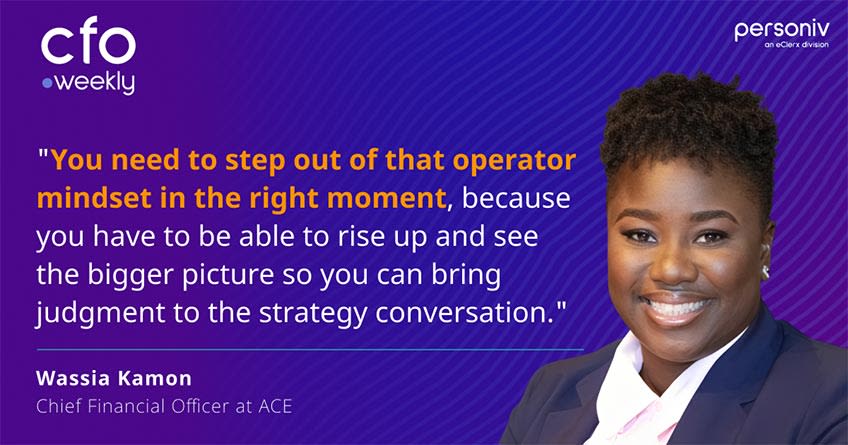
"You need to step out of that operator mindset in the right moment, because you have to be able to rise up and see the bigger picture so you can bring judgment to the strategy conversation." Kamon said. - 00:05:23 – 00:07:40
Building a Personal Board of Directors
Wassia credits much of her growth to building a personal board of directors, a network of roughly a dozen people from diverse fields, ages, and backgrounds who help her see the world differently. As CFOs spend increasing time with people outside their own finance team, having peers in marketing, supply chain, or law to bounce ideas off becomes essential to translating financial concepts into language the rest of the business understands.
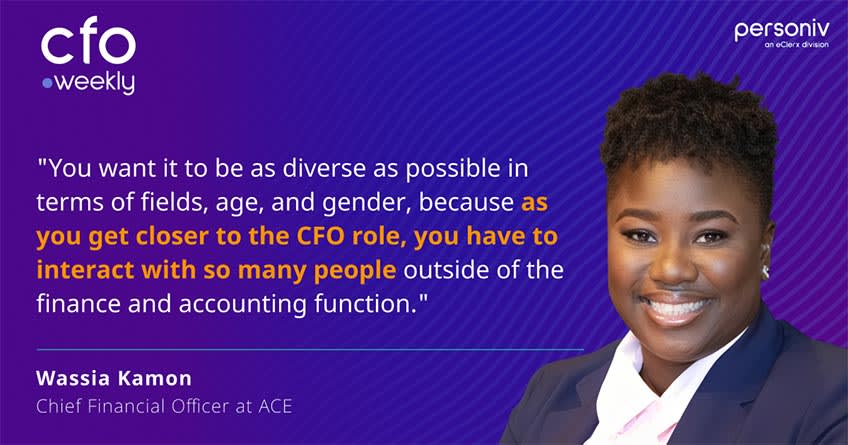
"You want it to be as diverse as possible in terms of fields, age, and gender, because as you get closer to the CFO role, you have to interact with so many people outside of the finance and accounting function." Kamon emphasized. - 00:07:49 – 00:10:07
Start Building Cross-Functional Relationships on Day One
The best time to start building relationships across the business is as early as possible, well before a title changes the way people interact with you. Wassia encourages her own team to block thirty minutes a week with someone outside of finance, not to ask for something, but to understand their reality and build trust before it's ever needed.
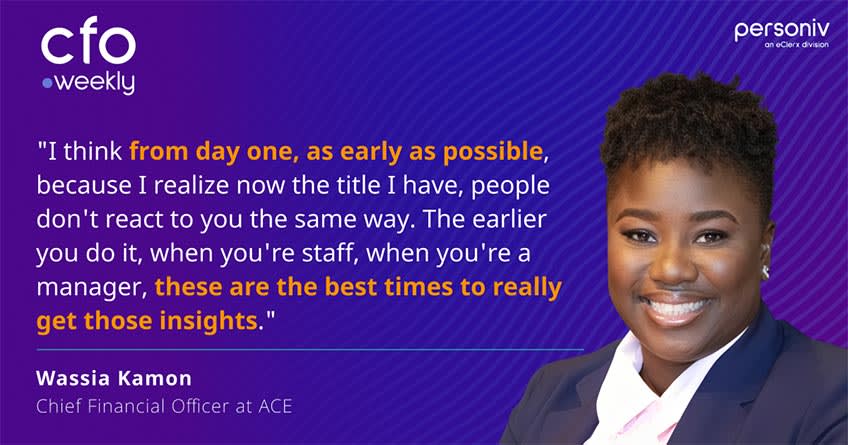
"I think from day one, as early as possible, because I realize now the title I have, people don't react to you the same way. The earlier you do it, when you're staff, when you're a manager, these are the best times to really get those insights." Kamon mentioned. - 00:10:28 – 00:12:27
AI Is a Tool, Not a Replacement
Wassia views AI as another tool in the leadership toolbox, one that should always empower people rather than replace them. She stresses the importance of guardrails, understanding what should and shouldn't be automated, and keeping a human in the loop, since finance and accounting professionals are held to a higher standard and can't lean on AI as an excuse when something goes wrong.
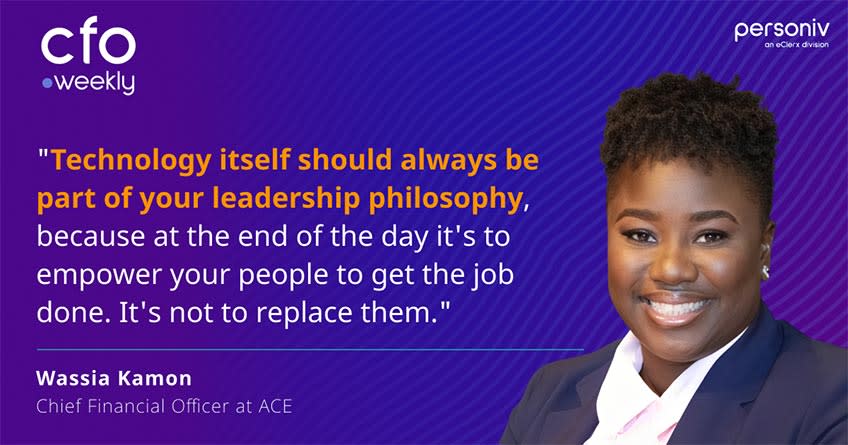
Kamon reflected on this, saying, "Technology itself should always be part of your leadership philosophy, because at the end of the day it's to empower your people to get the job done. It's not to replace them." - 00:15:45 – 00:17:37
The CFO Role Is Evolving Toward the CEO Seat
Looking three to five years ahead, Wassia expects more CFOs to move into CEO and COO roles as the position continues to expand well beyond traditional finance and accounting. The skills that will matter most mirror what a CEO needs: strategy, communication, and leading through uncertainty, a discipline that doesn't come naturally to finance professionals trained to prize certainty.
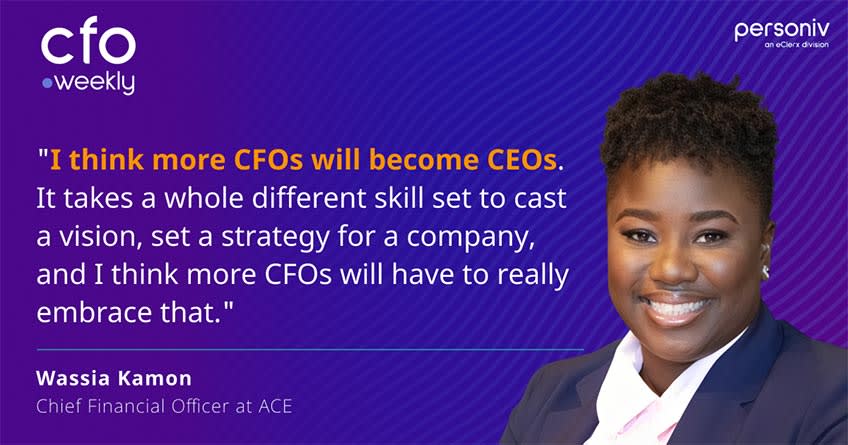
"I think more CFOs will become CEOs. It takes a whole different skill set to cast a vision, set a strategy for a company, and I think more CFOs will have to really embrace that." Kamon noted. - 00:19:09 – 00:20:22
Want more insights? Explore our full library of podcast blogs here.
To listen to the full conversations, check us out on Apple Podcasts, Spotify, and our RSS or your favorite podcast player!
Instructions on how to follow, rate, and review CFO-Weekly are here.
Acquiring the experiences that best prepare finance professionals for the CFO seat requires time to focus on strategy and leadership. We provide scalable, dedicated finance teams to handle the day-to-day operations so you can focus on the big picture. Drop us a line today to learn more.


