


In this episode of CFO Weekly, Kerrie Jones, Financial Controller at Peak Living, joins Megan Weis to explore the difference between compliance and professional judgment in accounting, why accountants remain among the most trusted business advisors, and how finance leaders build credibility through sound analysis rather than technical expertise alone. Kerrie brings a career built around strengthening financial controls, improving reporting, and leading high-performing accounting teams through periods of growth and change.
With more than eight years of experience hiring and developing accountants, and having advised organizations on accounting structure and process improvement, Kerrie shares how she turned the lesson “compliance asks whether we followed the steps, judgment asks whether the result makes sense” into a leadership philosophy. She also serves on the board of a nonprofit supporting adults with multiple disabilities, where financial stewardship and governance are equally critical. She unpacks how to build confidence in newer accountants, why AI can inform decisions but never own them, how to communicate an unpopular judgment call, and why the human element is becoming even more valuable in an AI-enabled world.
Show/Hide Transcript
00:48 - Megan Weis: Today I'm joined by Kerry Jones, financial controller at Peak Living. Kerry is an experienced accounting leader with career built around strengthening financial controls, improving reporting, leading high performing accounting teams, and helping organizations navigate periods of growth and change. Alongside her corporate leadership role, she has advised organizations on accounting structure and process improvement and serves on the board of a nonprofit supporting adults with multiple disabilities, where financial stewardship and governance are equally critical. In this episode, we'll explore one of the most enduring qualities of the accounting profession. We'll discuss why accountants continue to be among the most trusted business advisors, how finance leaders can build credibility through sound judgment rather than simply technical expertise, and why that human element is becoming even more valuable in an increasingly AI enabled world. Carrie, thank you so much for taking the time to be here with me today on the show.
01:56 - Kerrie Jones: No problem. Thank you for having me.
01:59 - Megan Weis: So, thinking back to the beginning of your career, was there a moment when you realized that accounting wasn't simply about getting the numbers right, but about earning the trust that comes with making difficult professional judgments?
02:12 - Kerrie Jones: I don't know that there's one dramatic moment. It was more of a gradual realization. Early on, I believe my value came from having the right answer. I know those things that I struggled with grasping the most, I worked harder to understand and become the expert at. But then as I moved into leadership roles, I discovered that people rarely remember whether I could quote an accounting rule. What they remembered was whether I was honest and when the answer was unpopular, whether I raised concerns when something didn't make sense, and whether I could be trusted to put the organization's best interests ahead of convenience. That was a big thing. Especially earlier in my career, learning that it's okay to bring some a concern up. At some point, I realized that professional judgment isn't really a trust exercise. The technical guidance tells you what's allowed Judgment determines what's right. That's a very different responsibility and one that stayed with me throughout my career, especially in the role that I'm in now. As a controller, the technical guidance tells you what's allowed. Judgment determines what's right.
03:24 - Megan Weis: I know as a young professional, it's oftentimes hard to push back because you're dealing with like executives and higher level people. And pushback can be very difficult early in your career.
03:36 - Kerrie Jones: Correct. And that's where the confidence you have to build that confidence. At first you're just learning where to click, where to go, how to actually complete the day to day tasks. But once you become confident and you have that integrity that keeps you grounded, it's easier to bring up concerns to upper level.
04:00 - Megan Weis: And throughout your career, you've led accounting teams through growth, audits and organizational change. Can you share a time when professional judgment mattered more than just simply following a process or role? Sure.
04:13 - Kerrie Jones: I feel like this is even still monthly occurrence. Can't be. One recent example that comes to mind involved a vendor payment issue where the process appeared to have been followed correctly, but something still didn't feel right and the payment ended up being issued incorrectly. Instead of assuming everything was fine because the checklist had been completed, it had gone through all the approvals and been ready to pay, we dug deeper into the history of the vendor. Once we found out that it was issued incorrectly, there was recent ownership change, the sequent events that led to the payment. There was an item that the vendors were merged and the payment got sent to the wrong place. Professional judgment requires us to look beyond that transaction, understand the context. In the end, identifying the root cause in this situation allowed us to recover from the mistake, improve our controls and strengthen the process. Meaning now we have controls in place that say, I'm going to follow this list of questions before I merge a vendor, for example, that's the difference between compliance and judgment. Compliance asks, did we follow the steps? Judgment asks, does this result make sense?
05:35 - Megan Weis: And you were just mentioning confidence in younger accountants. So how do you help newer accountants develop that confidence and to be able to trust their judgment instead of just relying on checklists or maybe technical rules?
05:51 - Kerrie Jones: This is my passion. This question is exactly speaking to the passion that I have. I've hired over 50 accountants over the last eight or nine years. Many of them are right out of college. Checklists are very important because what we do has deadlines. In order to meet the deadlines, we need checklists to keep us on track at first, when an accountant is learning, like I said, before, these are the main things relied on. You're teaching where to go in the system, the steps to accomplish tasks. After those are learned, though, that's where judgment comes in. I want people to understand the why behind the process, not just the steps. When a team member brings me a question, I often respond with questions of my own. What are you seeing? What concerns you? What alternatives did you consider? That can be uncomfortable at first because they're looking for an answer to their question. But over time, they begin developing the confidence to trust their own analysis. Checklists are very important and very valuable, but the goal isn't to create people who can follow a checklist. The goal is to create professionals who know when the checklist isn't enough. Takes time, but it's very doable.
07:09 - Megan Weis: And of course, AI is the hot topic of the day. So as it becomes more capable of analyzing data and applying accounting rules, which aspects of professional judgment do you think are going to remain uniquely human?
07:23 - Kerrie Jones: That's a great question. I've been personally using AI a lot more recently as it's become more popular, but I think context, ethics, accountability are very important to this. AI can process data faster than we ever could. It can identify patterns, summarize information, and even suggest conclusions. But what it can't do is understand the organizational dynamics for your company, your goals, your mission, what you're trying to accomplish, the past leading up to this, competing priorities, ethical considerations behind a decision. It also can't own the outcome, which is the big thing to me at the end of the day, people don't hold software accountable, they hold leaders accountable, or the person signing off accountable.
08:16 - Megan Weis: And do you believe that AI is going to strengthen professional judgment by providing us better information to rely upon, or weaken it by encouraging people to maybe rely too heavily on technology?
08:28 - Kerrie Jones: I think both are possible. And I know that this has probably been something that's brought up before, but I think both are possible because AI has tremendous potential to strengthen judgment. I know in my case, it has increased my ability to ask good questions. It has increased my ability to have critical thinking in my questions that I'm asking because it relies on the information we are giving it. And we have to give AI really good and clean specific information in order to get the responses that we're looking for. The risk comes when people stop questioning the output. Professional judgment isn't just making decisions, it's evaluating evidence. So if we treat AI recommendations as facts instead of inputs, our judgment will become weaker. And the organizations that benefit the most from AI will be the ones that Maintain healthy skepticism and critical thinking. I think skepticism and critical thinking are both important when using AI.
09:37 - Megan Weis: And you might have just touched on this a bit. But what can finance leaders do to ensure that their teams are using AI as a decision support tool without surrendering all accountability?
09:49 - Kerrie Jones: Leaders need to establish a simple principle. AI can inform decisions, but it cannot own decisions. So, yeah, I touched on that briefly. Teams should document important assumptions and they should validate significant conclusions. And they should also understand how outcomes are reached. Most importantly, though, leaders should model that behavior of the critical thinking of owning the decisions. They should model that behavior themselves. If executives treat AI outputs as unquestionable, employees will too. They're looking to the leaders as examples of how to use AI and what is acceptable. Leaders and accountants need to ask, do I understand this fully? Do I feel confident that my name is on this work? You're signing off and attached to that decision, not AI.
10:45 - Megan Weis: And we talked about pushback. But how can finance leaders communicate, or how should they communicate a judgment call when they know that other executives or stakeholders are probably going to disagree?
10:58 - Kerrie Jones: I would start with transparency. I explain the facts, the assumptions, the alternatives considered, and also the risks associated with each option that they're looking at. People may disagree with your conclusion, but they'll respect the process if it's thoughtful and objective. I found that trust is built when leaders are willing to show how they arrived at an answer, rather than simply defending the answer itself. To me, being willing and open to understanding that I may not have all the information and there may be a better call is very helpful because if I'm giving feedback, I need to be able to accept that I might not have had all the information I needed to make that call.
11:42 - Megan Weis: And professional judgment often gets tested most when there's pressure to deliver a particular outcome. How can finance leaders remain objective in those moments? I know that's sometimes hard to do.
11:56 - Kerrie Jones: It's very hard to do. And as you become more of a leader and in leadership positions, I think this is a bigger obstacle and a bigger issue. The key is remembering who you serve. As finance leaders, our responsibility is not to produce a desired outcome. Our responsibility is to provide an accurate picture of reality. So when pressure exists, I try to separate the facts from preferences. It's okay to discuss options. And what I try to do personally is understand what is being asked. I'm trying to understand why they're looking for a specific outcome and what specific outcome they're looking for. And then I can help explain to them where we're at or give them options. That may be not the initial option that they had thought of, but it's something that gets them to the same place.
12:51 - Megan Weis: And in your mind, what's the difference between being viewed as technically reliable versus being seen as a trusted and true strategic advisor?
13:01 - Kerrie Jones: Well, a technically reliable leader can tell you what happened. A strategic advisor can help you understand what it means and what to do next. So they've got both. They can tell you technically what happened, but they can also help you understand what it means, what that information is giving you, and what you can do next. Technical expertise earns credibility. Judgment earns trust. Organizations need both. But leaders become truly influential when they consistently connect financial information to business decisions.
13:35 - Megan Weis: That's a great answer. And you've worked in both corporate leadership and nonprofit governance. So has serving on a nonprofit board changed the way you think about accountability, stewardship, or financial decision making?
13:49 - Kerrie Jones: Absolutely. In nonprofits, every dollar represents trust. You're managing resources that someone donated because they believe in the mission. That perspective reinforces the idea that stewardship isn't just about protecting assets, it's about honoring the responsibility you've been given. I think that lesson also applies equally in the corporate world, just in a different perspective.
14:16 - Megan Weis: And I know we've been talking about this throughout, but in your experience, what behaviors consistently build trust between finance leaders and the rest of the organization, especially when difficult decisions need to be made?
14:30 - Kerrie Jones: We've talked about this a little bit throughout this interview. Consistency, transparency, and follow through. People trust leaders who tell the truth when it's easy and when it's difficult. They trust leaders who explain decisions clearly and who do what they say they'll do. Trust isn't built through one heroic big moment. It's built through hundreds of small interactions over time.
14:56 - Megan Weis: And we've talked about what people can do to create an environment where people feel empowered. But what can organizations do to create kind of a safe space where people feel empowered to challenge assumptions and raise concerns?
15:15 - Kerrie Jones: I think this has been talked about a lot in leadership podcasts and leadership discussions. Leaders need to make it safe to ask questions. If people are punished for challenging assumptions, they'll stop speaking up if they feel like challenging. In my role, one of my employees challenges my assumption and I react defensively. They'll stop speaking up. They'll be nervous to do it. They won't want to. The best organizations reward thoughtful disagreement because it improves decision quality. I've always believed that when someone raises a concern respectfully and professionally, it's not resistance. That's engagement.
15:57 - Megan Weis: And I'm just curious. So A new accountant. What advice would you give them for gaining confidence? I mean, is it finding a mentor that can help them? Is it practicing some of these skills? What advice would you give them to help them build this confidence?
16:16 - Kerrie Jones: I think I would give them multiple steps of advice. One is become an expert at what you're doing. So that means whatever you're learning in your field, in your career right now, learn every single thing you can about what you're doing. Become an expert at it so that you feel confident giving somebody else an answer or teaching somebody else or training somebody else about what you're doing. Second step, second thing I would highly recommend is continuous learning. That can be doing LinkedIn learning classes. You can get a mentor. And I would highly recommend finding a mentor. It can be somebody at your company, it can be somebody in your profession. I highly recommend also getting a mentor and or taking additional courses that help you in your career that will naturally increase your confidence. But also I think in order to have the confidence, you have to be open to hearing feedback and wanting to improve and increase your knowledge.
17:26 - Megan Weis: And I hear so many times these days, and it's probably more true now than it was maybe 20 or 30 years ago for an accountant, but, like, knowing the business, any advice for, like, a new person starting out, really, truly understand the business that they're working within?
17:47 - Kerrie Jones: I love this question only because it speaks to my youth. Growing up, I was a very curious person. I've always been very curious. But I would say, and that's what tells me the answer to your question is ask a lot of questions. Be curious. Find out where the numbers come from that you're dealing with every day. Whatever aspect of accounting you're doing. Ask the questions. Become curious. Think of it as a puzzle that you're trying to fit all the pieces together to where that one number might come from or on the financials. Ask a lot of questions. Be curious. I know that when I'm training a new or hiring a new employee, I always tell them, ask a lot of questions. And I truly mean it. Because the more questions somebody is asking, the more they're learning, the more open they are to learning, and the more. The quicker that they will become confident because they have the answers.
18:49 - Megan Weis: And the world is evolving faster, I think, than I know I've ever seen it. But how do you see the role of CFO or controller or just finance in general evolving over the next, let's say, three to five years? And what new skills or mindsets are going to be critical for people entering this field.
19:09 - Kerrie Jones: Well, I believe that these roles will become less focused on reporting the past and more focused on helping organizations navigate the future. Technology and AI will automate a lot of the transactional and analytical work that consumes finance teams today. So that means that leaders will need stronger communication skills, greater business acumen, meaning knowing how each of the business pieces of the business interact and come together for finance and the ability to lead through uncertainty. So the most successful leaders won't simply be financial experts. They'll be translators, advisors, strategic partners who help organizations make better decisions. Technical competence will remain essential, but that professional judgment, leadership, the ability to trust will become even more valuable as information becomes easier to access. Judgment becomes the true differentiator Terry, thank
20:13 - Megan Weis: you so much for taking the time to be here with us today and this has been a wonderful conversation.
20:19 - Kerrie Jones: It's my pleasure. Thank you for having me and to
20:22 - Megan Weis: all of our listeners, please tune in next week and until then, take care.
What You’ll Learn:
-
The difference between compliance and professional judgment, and why it matters
-
How to help new accountants move beyond checklists and trust their own analysis
-
Which aspects of judgment will remain uniquely human as AI becomes more capable
-
How finance leaders can use AI as a decision support tool without surrendering accountability
-
How to communicate a difficult judgment call when stakeholders are likely to disagree
-
What behaviors consistently build trust between finance leaders and the rest of the organization
-
How the CFO and controller roles will evolve over the next three to five years
Key Takeaways:
Professional Judgment Determines What’s Right
Early in her career, Kerrie believed her value came from having the right answer. As she moved into leadership, she realized people rarely remembered whether she could quote an accounting rule. They remembered whether she was honest, whether she raised concerns when something didn’t make sense, and whether she put the organization’s best interests ahead of convenience. That shift, from technical expert to trusted professional, became the defining lesson of her career.
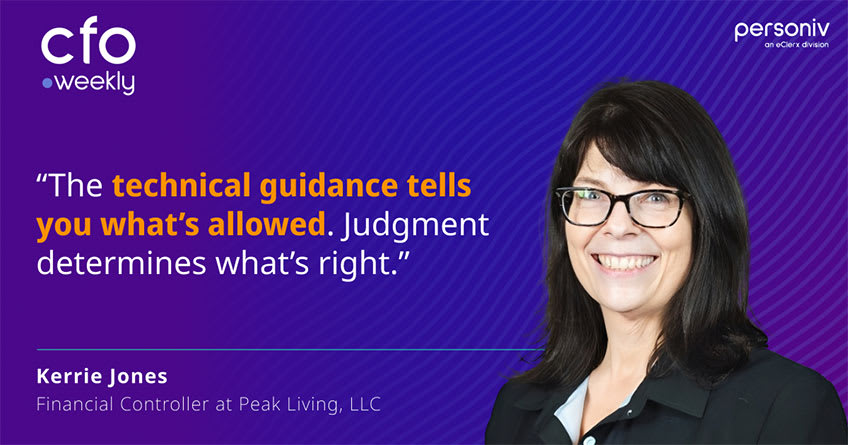
“The technical guidance tells you what’s allowed. Judgment determines what’s right.” Jones emphasized. - 00:02:12 – 00:03:24
The Difference Between Compliance and Professional Judgment in Accounting
Kerrie shares a recent example in which a vendor payment had followed every step of the process and cleared all approvals, yet something still didn’t feel right. By digging into the vendor’s history, her team discovered a recent ownership change and a vendor merge that sent the payment to the wrong place. Identifying the root cause allowed the team to recover from the mistake and build new controls, including a list of questions to answer before any vendor is merged.
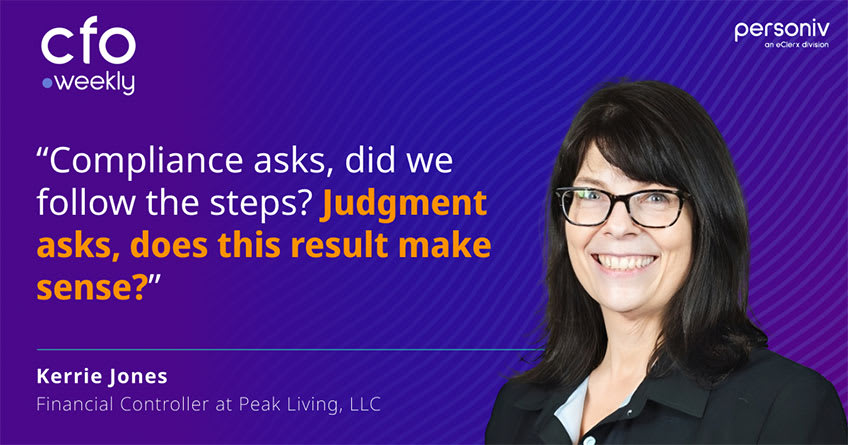
In Jones's words, “Compliance asks, did we follow the steps? Judgment asks, does this result make sense?” - 00:04:13 – 00:05:35
Building Confidence in New Accountants
Having hired more than 50 accountants over the last eight or nine years, Kerrie sees checklists as essential for meeting deadlines and teaching the basics. But once the steps are learned, she wants her team to understand the why behind the process. When a team member brings her a question, she often responds with questions of her own: What are you seeing? What concerns you? What alternatives did you consider? Over time, that habit builds the confidence to trust their own analysis.
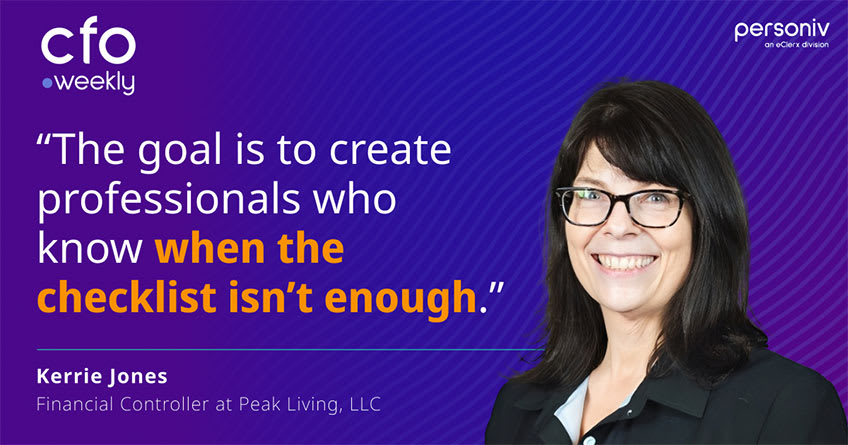
“The goal is to create professionals who know when the checklist isn’t enough.” Jones said. - 00:05:51 – 00:07:09
AI Can Inform Decisions, But It Cannot Own Them
Kerrie believes AI has tremendous potential to strengthen judgment, and she has personally found it sharpens the questions she asks. The risk comes when people stop questioning the output. AI cannot understand an organization’s dynamics, mission, history, or ethical considerations, and it cannot own the outcome. She encourages leaders to document assumptions, validate significant conclusions, and model critical thinking themselves, because employees will follow the example set by their leaders.
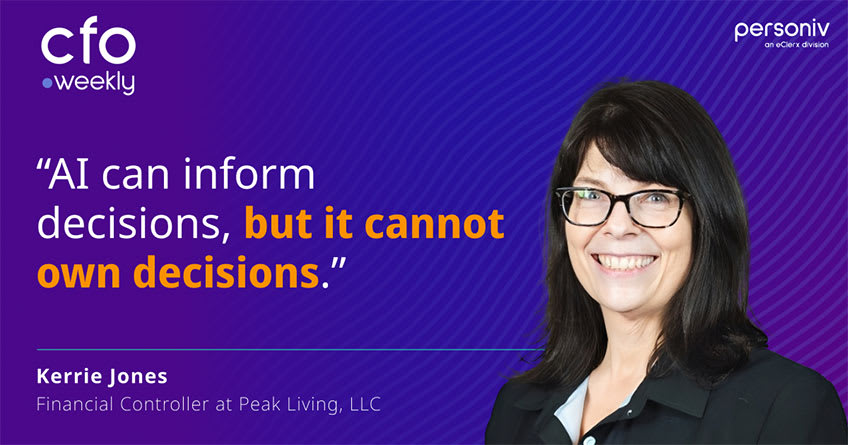
“AI can inform decisions, but it cannot own decisions.” Jones mentioned. - 00:07:23 – 00:10:45
Communicating Judgment Calls Under Pressure
When stakeholders are likely to disagree, Kerrie starts with transparency: the facts, the assumptions, the alternatives considered, and the risks of each option. People may disagree with the conclusion, but they will respect a thoughtful and objective process. Under pressure to deliver a particular outcome, she separates facts from preferences and works to understand why a specific result is being requested, then offers options that may reach the same place.
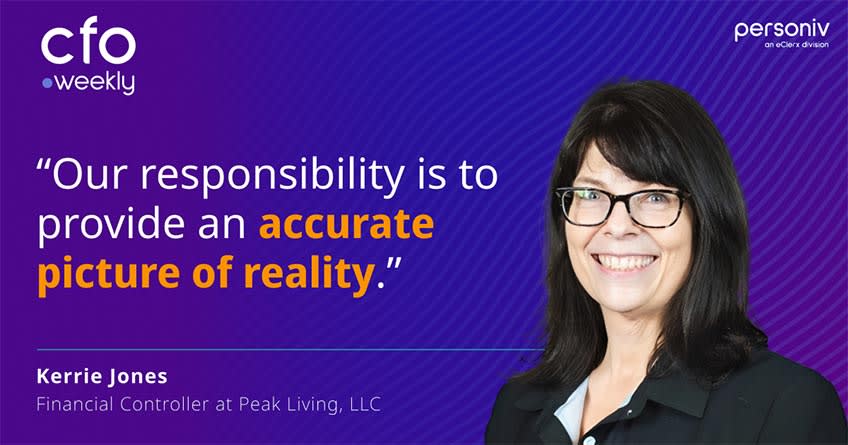
“Our responsibility is to provide an accurate picture of reality.” Jones noted. - 00:10:58 – 00:12:51
Trust Is Built Through Small Interactions
Consistency, transparency, and follow-through are the behaviors that build trust between finance leaders and the organization. Kerrie also emphasizes psychological safety: if people are punished or met with defensiveness when they challenge assumptions, they will stop speaking up. The best organizations reward thoughtful disagreement because it improves decision quality.
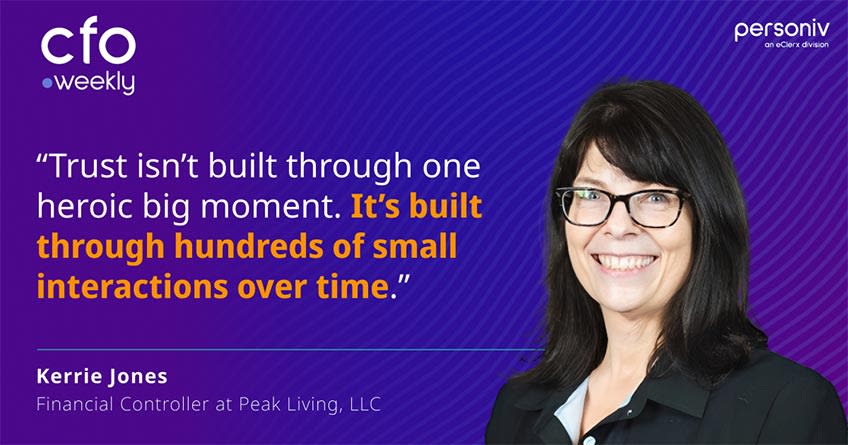
“Trust isn’t built through one heroic big moment. It’s built through hundreds of small interactions over time.” Jones remarked. - 00:14:30 – 00:15:57
The Future of Finance Leadership
Kerrie expects finance roles to become less focused on reporting the past and more focused on helping organizations navigate the future. As technology and AI automate transactional and analytical work, leaders will need stronger communication skills, greater business acumen, and the ability to lead through uncertainty. The most successful leaders will be translators, advisors, and strategic partners.
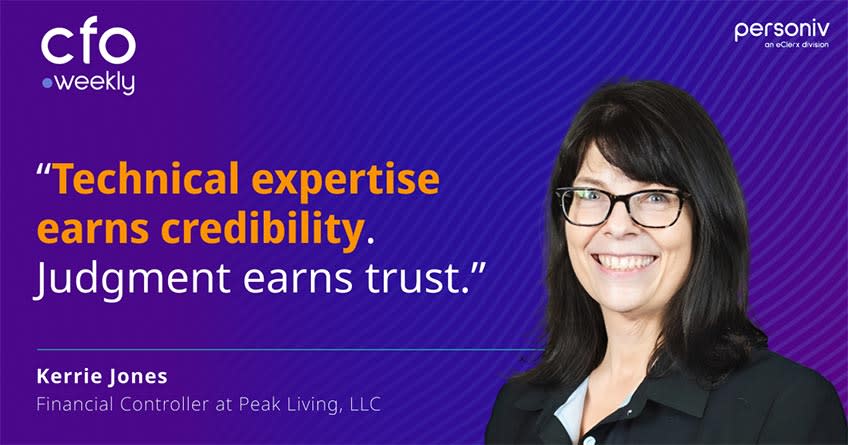
“Technical expertise earns credibility. Judgment earns trust.” Jones pointed out. - 00:19:09 – 00:20:13
Want more insights? Explore our full library of podcast blogs here.
To listen to the full conversations, check us out on Apple Podcasts, Spotify, and our RSS or your favorite podcast player!
Instructions on how to follow, rate, and review CFO-Weekly are here.
Moving beyond simple compliance to exercise real professional judgment requires operational breathing room. We build custom, dedicated accounting teams to handle the daily heavy lifting so your leaders can focus on high-level strategy. Drop us a line today to learn more.


